
Barclaycard Smartpay Review 2026: 1.6% Flat, Next-Day
🏠 Payment Processing» Barclaycard Smartpay Review (2026)
8 MIN READ
Advertising Disclosure
Business Expert is an independent comparison site. Some partners may compensate us for promotion. This never affects our impartial evaluations based on fees, customer service, and product features.

Barclaycard Smartpay Review (2026)

Barclaycard Smartpay charges 1.6% a card and pays out the next day, with no monthly fee. Bigger businesses get a quoted price instead.

In-depth review
Independently assessed
Rates verified May 2026
Best for Bank-Grade UK Acquiring
Barclaycard
  • Priced on your turnover, not a flat rate. The example Barclaycard publishes, 0.7% + 3p, undercuts Square and Zettle.
  • A direct Barclays acquirer. Bank-grade underwriting, in-house fraud monitoring, and one provider relationship that runs from PAYG up to enterprise IC++.
  • Next-day settlement as standard, with no minimum monthly fee on the PAYG reader.
View Deal →

Best for Developer-Led Online Payments

Stripe

Details →

Best for Omnichannel at Scale

Worldpay

Details →

Best for Transparent IC++ Mid-Market

Teya

Details →
Our score:3.6 / 5i
Score breakdown
Customer reviews
3.0
Value for money
4.7
Features
3.0

Our Verdict

If I were running an established UK business with steady card takings, I’d seriously consider Barclaycard Smartpay. Barclaycard quotes on turnover instead of publishing a flat rate, and the example it does publish, 0.7% plus 3p, sits well under Square and Zettle’s standard pricing. Settlement is next-day, and you are dealing with Barclays rather than a newer payments brand.

That said, I would not ignore the support record. Barclaycard’s wider Trustpilot score is poor, and many complaints from merchants focus on billing problems, slow dispute resolution and difficulty getting help when something goes wrong. If a payment issue during a busy shift would quickly damage your customer relationships, I’d treat support as the main risk. This is not the option I’d choose for a start-up that needs to take payments immediately. Approval takes at least a few days, and larger merchant setups can take longer. But for an established business taking meaningful monthly card volume, Smartpay is worth a close look, especially if you want bank-backed processing, a simple flat rate and a route into IC++ pricing later.

Visit Barclaycard Smartpay →
Best for
Established UK businesses taking around £10,000 to £200,000 a month in card payments, where the priority is a competitive flat rate, next-day settlement and a more traditional acquiring bank behind the service.
Also worth it for
Hospitality businesses that do not want a separate till system. Smartpay Touch can handle split bills, tipping and receipts from a handheld device for a fixed monthly cost.
Think twice if
You need fast, reliable support when something goes wrong. The public support record is the clearest reason to hesitate, particularly for businesses where a payment dispute or outage would quickly affect customers.
Not for
New businesses that need to start taking card payments this week. Faster sign-up options such as Square, Zettle or SumUp are likely to be easier if speed matters more than rate.

Rate and pricing verified May 2026.

Barclaycard Smartpay Payment Processing at a Glance

Best For

You run an established UK business taking £10k–£200k/month in card payments, and you want bank-grade underwriting, next-day settlement, and a competitive flat rate with no minimum monthly commitment on the PAYG tier.

Not Ideal For

Start-ups that need same-day sign-up. Businesses that want fully published pricing across all tiers without a sales conversation. Or any operator who treats responsive support during peak trading as a hard requirement.

Key Facts

FCA-regulated UK acquirer (Barclays plc). Smartpay Anywhere is quoted on your annual card turnover and carries no monthly fee; Barclaycard’s published example is 0.7% plus a 3p authorisation fee on consumer Visa and Mastercard. Smartpay Touch is around £29/month, hardware included.

Next-day settlement. IC++ pricing at volume by sales quote. Amex accepted on most accounts, subject to your merchant category code.

What Is Barclaycard Smartpay Payment Processing?

Barclaycard Payments is the merchant-services arm of Barclays plc. It’s a separate business from the consumer credit-card brand most UK adults carry in their wallet, though both sit inside the same Barclays group.

You’re dealing with a direct UK acquirer. Barclaycard holds its own FCA authorisation and underwrites its own risk. That’s a different proposition from a fintech reseller routing your transactions through a sponsor bank.

How Does Barclaycard Smartpay Payment Processing Work?

Barclaycard Payments holds direct acquiring licences with Visa and Mastercard. When a customer taps their card on a Smartpay terminal, the authorisation clears through Barclaycard’s own infrastructure. No intermediary, no sponsor bank in the chain.

In practice, that has two consequences for you. When a settlement query or chargeback comes up, you call Barclaycard directly. And the Barclays group underwriting means you’re dealing with real bank-grade due diligence on both sides of the relationship.

Onboarding is slower than the fintech alternatives precisely because the underwriting is more rigorous. Once you’re on the books, the account relationship is more stable. That’s the trade-off, and it’s worth naming clearly before you sign anything.

What Payment Types Does Barclaycard Smartpay Support?

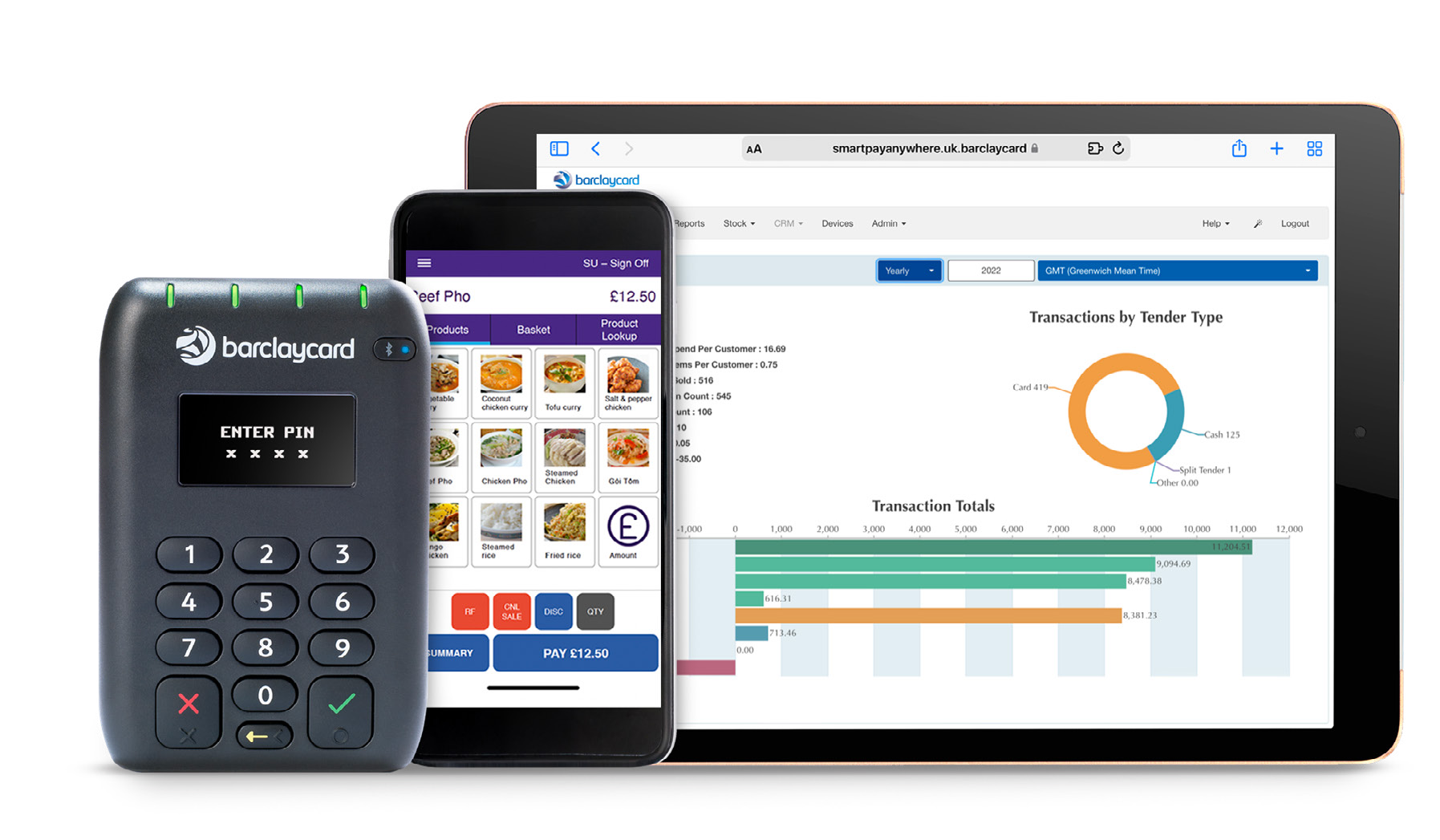
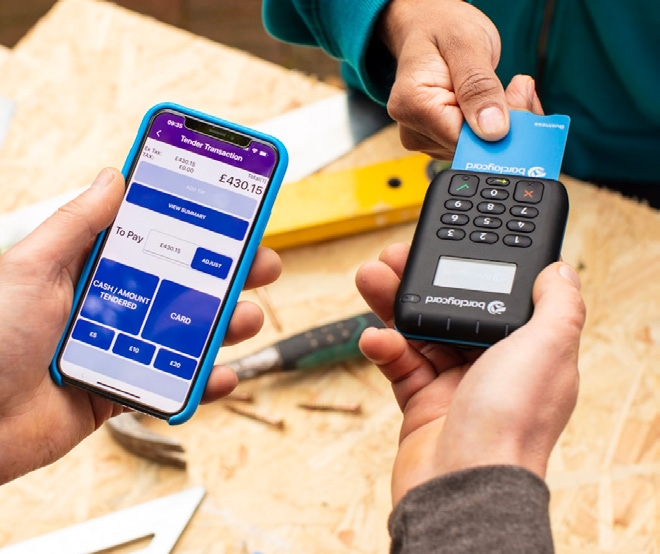
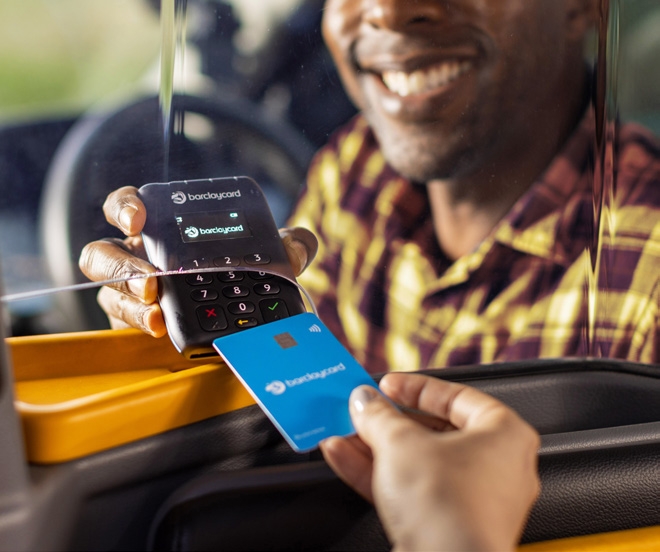
Four product lines cover the main use cases. Smartpay Anywhere is the Bluetooth mobile reader. Smartpay Touch is a standalone handheld POS. Smartpay Advance covers countertop and enterprise. And the online payment gateway handles card-not-present.

All channels accept Visa, Mastercard, contactless including Apple Pay and Google Pay, and Amex subject to your merchant category code. The online gateway supports 114+ currencies and 3D Secure 2 for Strong Customer Authentication (SCA) under UK PSD2, which matters if you sell to European customers.

How Much Does Barclaycard Smartpay Payment Processing Cost?

Barclaycard Smartpay runs tiered pricing: the PAYG tier has a published flat rate, and everything above it needs a sales conversation. Worth knowing before you start procurement, because the headline figure is only the part you can see.

What Are Barclaycard Smartpay’s Transaction Fees?

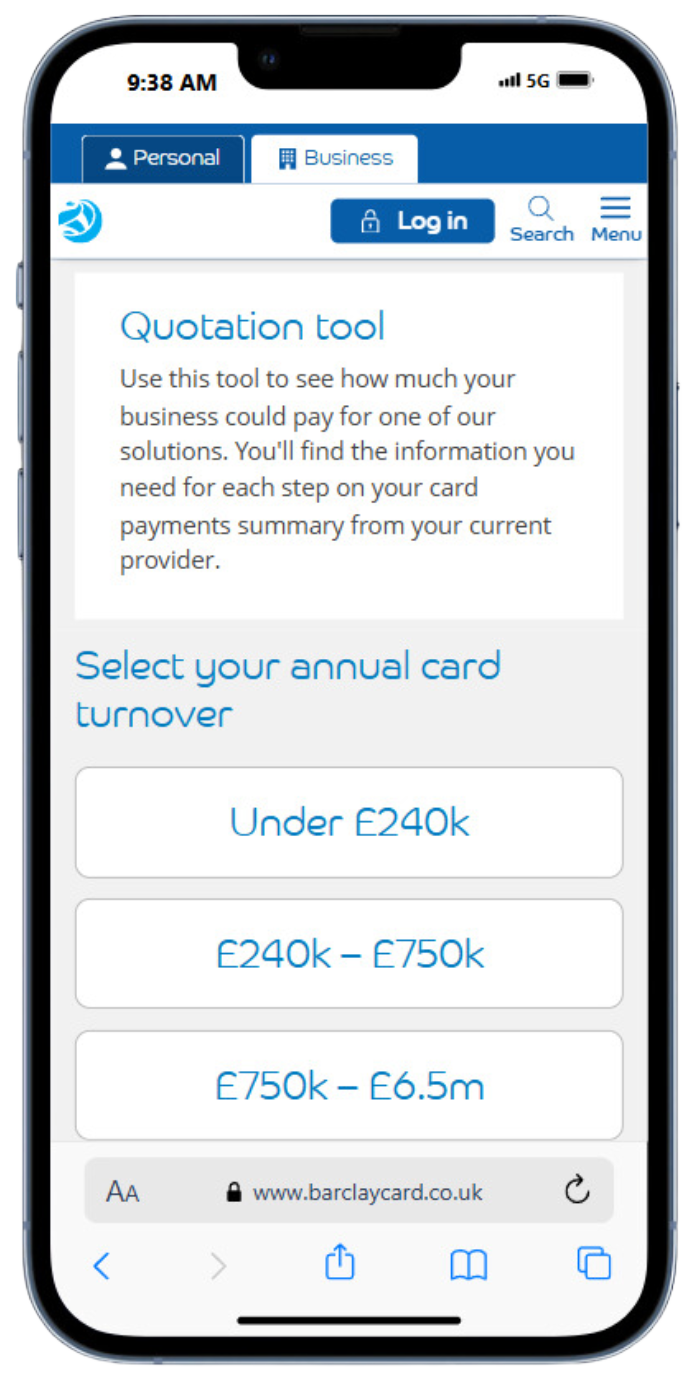
Barclaycard no longer publishes a headline rate for Smartpay Anywhere. It quotes on your annual card turnover, and the worked example on barclaycard.co.uk/business shows a £50 consumer debit sale costing 0.7% (35p) plus a 3p authorisation fee, 38p all in. That covers consumer UK Visa and Mastercard debit and credit, contactless, and digital wallet payments. We checked the pricing page in July 2026.

In concrete terms: Square charges 1.75%. Zettle charges 1.75% on PAYG, dropping to 1.29% above £6k/month on its Growth plan. On £25k/month, we calculate that a Manchester city-centre cafe saves £37.50 a month against Square. That’s £450 a year. Not life-changing, but not trivial either.

If your volume is climbing, Interchange++ is the next step, available by sales negotiation for higher-volume merchants. You pay the card scheme’s interchange rate, a scheme fee, and Barclaycard’s margin separately.

In our view, IC++ is only worth pursuing once your volume justifies the itemised-billing complexity that comes with it.

Are There Monthly, Setup or Hardware Fees?

Smartpay Anywhere: no monthly fee, no minimum volume, one-off £29+VAT for the reader. That’s a genuine PAYG model and one of the cleaner entry points in UK merchant acquiring.

Smartpay Touch is a monthly subscription with the hardware included. We couldn’t confirm the precise May 2026 figure independently, and the price has shifted before.

Enterprise tiers (Smartpay Advance, the online gateway, bespoke IC++ contracts) are priced by quote. Non-PAYG onboarding typically runs one to four weeks for KYC and AML. No published setup fee on enterprise accounts.

What Other Fees Should You Watch?

Chargeback fees vary by contract tier and aren’t prominently published. Cross-border surcharges apply to non-UK issued cards. Our advice: ask for a fully itemised fee schedule before you sign anything above the PAYG tier.

The headline rate is the number everyone discusses. Neither the chargeback fee nor the cross-border surcharge is published plainly, and those are the two lines that decide what a contract really costs you.

That risk is higher for businesses with international customers or elevated dispute rates. Get those terms in writing before you sign.

How Quickly Does Barclaycard Smartpay Pay Out?

After the rate, settlement speed is usually the number that matters most, and Barclaycard delivers next-day: card sales taken on Monday land in your nominated UK bank account on Tuesday. That puts it level with Square and ahead of Stripe’s standard two-day cycle.

What Are Barclaycard Smartpay’s Settlement Times?

Settlement runs on a next-business-day cycle for most standard accounts. Sales batched by midnight settle the following business day. So a Friday evening’s takings land in your account on Monday morning.

Picture how that lands on your working-capital cycle. You run a three-site fish-and-chip business in Yorkshire. Your fish supplier runs a Tuesday payment file off Monday’s cleared card settlement.

With next-day settlement, the weekend takings clear in time and the supplier file goes out clean. With a two-day cycle, you’d be funding the gap from reserves.

Can Barclaycard Smartpay Hold, Delay or Reserve Funds?

Higher-risk merchant categories (travel, high-ticket retail, subscriptions) may face rolling reserves at onboarding. A reserve holds back a percentage of your settlements for a defined period to cover potential chargebacks.

Raise reserves as a direct question during underwriting and get the answer in writing, because Barclaycard doesn’t publish its policy. A 10% rolling reserve on £50k/month is a £5k cash-flow constraint. That belongs in your treasury model from day one, not as a surprise after you’ve switched.

For lower-risk standard merchants on the PAYG tier, we understand reserves are typically not applied. Confirm your category in the application process so you know where you stand.

What Payment Features Does Barclaycard Smartpay Offer?

Barclaycard covers every channel: at the till, at the table, or online from a UK business customer. What you actually get depends entirely on which tier you’re on.

Does Barclaycard Smartpay Support Online, In-Person and Remote Payments?

In person, you have two options. Smartpay Anywhere is the mobile reader, Bluetooth-tethered to your phone. Smartpay Touch is the standalone handheld with built-in POS: split bills, tipping workflows, digital receipts.

A 30-cover bistro in Bristol can run full table-side service from Smartpay Touch alone, with no separate till.

Online and card-not-present, the Barclaycard gateway supports hosted payment pages and a direct API the Barclaycard Payment Acceptance Solution (BPAS), with 3D Secure 2 baked in. Pay-by-link is supported through the gateway for invoice and remote sales.

Gateway pricing isn’t publicly listed. If online payments are a meaningful revenue stream for you, get a quote early. The gateway is more sales-led than the PAYG reader tier.

What Integrations and Business Tools Are Included?

The Barclaycard Payments API is available for enterprise integrations. For most small and medium-sized businesses, the Smartpay Anywhere app and the Smartpay Touch built-in POS cover day-to-day needs without any custom build work.

Barclaycard lists no accounting-software integration at all. We read the Smartpay Touch page and both business card pages on 28 August 2026 and found nothing connecting either product to Sage, Xero, QuickBooks or FreeAgent. Reporting lives in the Barclaycard online portal at no extra cost, which is useful for watching takings and useless for keeping books. Getting the numbers into your accounts means exporting them and importing them again. If your bookkeeper expects a live feed, price that reconciliation work in before you sign the 12-month contract.

Recurring billing through tokenised stored cards is available via the online gateway. This is mostly an enterprise feature accessed through the API. If you run subscriptions, confirm API support and tokenisation terms at the sales stage, rather than assuming parity with Stripe or GoCardless.

How Does Barclaycard Smartpay Handle Chargebacks, Disputes and Security?

Barclaycard runs bank-grade security infrastructure. PCI DSS Level 1 compliance and 24/7 fraud monitoring are standard across the product range, not paid add-ons.

How Are Chargebacks and Disputes Managed?

Chargeback disputes go through the Barclaycard merchant portal or the dedicated merchant-services phone line. Evidence submission, status tracking, and fee reconciliation sit alongside your settlement data.

We rate this as more manual and phone-dependent than Stripe’s dashboard-led dispute workflow. For businesses in high-chargeback categories (travel, events, subscription boxes), the admin friction adds up fast. Model the staff time before you commit to Barclaycard as your primary acquirer.

Is Barclaycard Smartpay Secure and Compliant?

PCI DSS Level 1 is the highest certification level for payment processors. Barclaycard’s fraud monitoring is backed by Barclays group infrastructure.

That’s more substantial than the risk screening you get at most fintech acquirers. We rate it as one of the stronger compliance positions in UK small-business acquiring.

Card-present transactions via chip-and-PIN and contactless are inherently SCA-compliant. The online gateway implements 3DS2 for card-not-present under UK PSD2. Optional fraud-prevention add-ons are available on enterprise accounts.

What Is Barclaycard Smartpay Like to Use Day to Day?

If you’re comparing Barclaycard to Square or Zettle on day-one ease of use, the gap is real. Smartpay Anywhere is lightweight once you’re set up. Getting there takes longer, and the enterprise tiers are a different proposition entirely.

How Easy Is Barclaycard Smartpay to Set Up?

Smartpay Anywhere: apply online, receive the reader, download the app, take payments. Businesses under £100k/year typically get approved in one to three business days. Slower than Square or SumUp, faster than most enterprise acquirers.

Smartpay Touch and the enterprise tiers are different. Sales call, underwriting, KYC and AML documentation, hardware delivery. Expect one to four weeks. That’s not unusual for a bank-grade acquirer.

It’s part of the underwriting rigour you came for. But if you need card acceptance live this week, Barclaycard isn’t the answer.

What Is the Dashboard or App Like?

The Smartpay Anywhere app (iOS and Android) is the primary interface for PAYG merchants: transaction history, refunds, basic sales reporting. App-store feedback is mixed.

It generally works, but connectivity issues and occasional crashes after iOS updates come up often enough to take seriously. Worth checking on your specific device before you commit.

The Barclaycard for Business portal gives you fuller transaction reporting and VAT-compatible exports. That’s a step above what pure-fintech PAYG readers offer.

Note that not every Smartpay device supports full portal access. Confirm which applies to your product before you rely on the portal for month-end reconciliation.

What Do Customers Say About Barclaycard Smartpay?

We find the public review picture for Barclaycard Payments consistent enough to take seriously. You can’t dismiss it as outlier noise.

What Do Positive Reviews Mention?

Where merchants are positive, two themes come up most often: hardware reliability on Smartpay Touch, and the stability of the acquirer relationship itself.

We found fewer reports of unexpected account closures than you see with fintech acquirers. If account-freeze risk has cost you sleep before, that is a real advantage.

Next-day settlement is consistently described as reliable. Merchants who have grown through the product tiers also call out the single-provider upgrade path as a genuine operational advantage. One fewer re-underwriting process when you scale.

What Complaints Come Up Most Often?

Trustpilot scores for Barclaycard UK have historically been very low: 1.3/5 in late 2024. That figure blends consumer credit-card and merchant complaints.

The merchant themes are consistent: billing disputes that take too long, and reaching the right person during peak trading is harder than it should be for a bank this size.

App-store feedback on Smartpay Anywhere flags intermittent connectivity and occasional crashes after iOS updates. If you’re a mobile-primary business, an app failure at 2pm on a busy Saturday is an operational problem.

Our honest read: Barclaycard is more stable and less freeze-prone than some fintech alternatives, but resolving a billing query is slower and more effort than you’d expect from a provider this size. We see that gap as the single biggest reason to think twice before signing.

Who Is Barclaycard Smartpay Payment Processing Best For?

Which Businesses Is Barclaycard Smartpay Best Suited To?

UK small and medium-sized businesses taking £10k–£200k/month in card payments are the natural fit. At that volume, the rate Barclaycard quotes produces a real cost advantage over Square and Zettle’s flat pricing.

Next-day settlement covers normal supplier-payment cycles, and the bank-grade acquirer relationship gives you underwriting stability the fintech acquirers can’t match.

Hospitality operators without a separate till system will get the most out of Smartpay Touch. Built-in split-bill, tipping, and receipt printing at a fixed monthly cost handle the full table-side service from one device.

If you’re anticipating growth, the single-provider upgrade path matters. You can move from PAYG reader to bespoke IC++ rates without switching acquirer. That avoids re-underwriting and the cash-flow disruption of a mid-quarter settlement-timing change.

When Should You Consider an Alternative?

If you need card acceptance live within 24 hours, go to Square, SumUp, or Zettle. Smartpay Anywhere is a few days minimum, and enterprise tiers are several weeks.

Customer-service quality is the other dealbreaker. If you need to reach a responsive human during a Friday-evening payment crisis, the public review record makes Barclaycard a risk, and Stripe and Worldpay carry stronger operational support reputations at equivalent merchant tiers.

Online-first businesses with a developer team should look at Stripe first. Barclaycard’s gateway isn’t built for developer-led custom integration the way Stripe’s API is, and Stripe’s 1.4% + 10p in-person rate via Terminal is genuinely competitive for mixed online-and-offline operations.

What Are the Best Alternatives to Barclaycard Smartpay Payment Processing?

Stripe, Worldpay, and Teya each replace Barclaycard on a different dimension. We pick these three because the right alternative depends entirely on what you’re optimising for: developer tooling, omnichannel depth, or pricing transparency.

Barclaycard Smartpay vs Stripe

Stripe is the better choice for online-first and developer-led businesses. Published rates (1.4% + 10p for Stripe Terminal on EEA cards in person), instant sign-up, and an industry-leading API make Stripe the default starting point for UK businesses building a custom checkout.

Barclaycard wins on small-value, high-volume offline transactions. Stripe Terminal charges 1.4% + 10p on EEA cards, and it is the flat 10p that hurts on a small ticket. A £6 flat white costs 18.4p with Stripe Terminal, against 7.2p on Barclaycard’s published example rate of 0.7% + 3p.

You run a 200-coffee-a-day independent on Brick Lane, six days a week, and that 11.2p gap is about £582 a month in your favour, just under £7,000 a year. On low-ticket, high-volume, the shape of the maths is unambiguous. The caveat is that Barclaycard’s figure is an illustration rather than a rate card, so your own number arrives with the quote.

In-person rate1.4% + 10p (EEA cards)
PricingFlat-rate, published, no contract
Sign-upInstant; industry-leading API
Best onCustom online checkouts
Best forOnline-first, developer-led businesses

Barclaycard Smartpay vs Worldpay

Worldpay is the largest UK acquirer, and we treat it as the natural comparison for established businesses with multi-site, omnichannel needs and appetite for a long-term enterprise agreement.

We’d put Barclaycard ahead at the PAYG tier. Worldpay doesn’t offer a competitive no-monthly-fee mobile reader at Barclaycard’s price point.

For complex multi-lane, multi-site enterprise setups, Worldpay’s depth of UK acquiring relationships is the stronger fit. That trade-off cuts cleanly along volume and complexity.

ScaleLargest UK acquirer
Best fitMulti-site, omnichannel enterprise
ContractLong-term enterprise agreement
PAYG readerNo competitive no-monthly-fee reader
Best forComplex multi-lane / multi-site setups

Barclaycard Smartpay vs Teya

Teya is a modern UK acquirer targeting established small and medium-sized businesses with transparent IC++ pricing and flat-fee hardware. If you take £50k+/month and you want IC++ transparency without a legacy acquirer relationship, Teya is the more modern alternative.

Barclaycard wins on brand stability and Barclays group underwriting. We’d give Teya the win on pricing transparency and a more modern interface. Your decision rests on which one you weight more heavily.

PricingTransparent IC++
HardwareFlat-fee
Best fit£50k+/month established small and medium-sized businesses
RelationshipModern acquirer, no legacy ties
Best forIC++ transparency, modern interface

Final Verdict: Is Barclaycard Smartpay Payment Processing Worth It?

For an established UK business taking meaningful card volume, Barclaycard Smartpay does the two things that count: a competitive quoted rate and next-day settlement.

A bank-grade acquirer that won’t freeze your account on a Friday afternoon because an algorithm flagged a transaction pattern it didn’t recognise.

The upgrade path is a genuine advantage. When you outgrow the flat rate at volume, you negotiate IC++ terms with a provider that already knows your business. Operationally, that’s worth something most reviews underweight.

The customer-service reputation is the counterweight, and we don’t think it’s a small one. If resolving a payment dispute quickly matters to your customer relationships, Barclaycard’s track record is a real procurement risk to manage.

In our view: worth it for the right business. Established, volume-driven, offline-primary, with the operational resilience to absorb the support gap. Not worth it if fast onboarding or a responsive account team are hard requirements.

Frequently Asked Questions

  • What is Barclaycard Smartpay Anywhere?

    Barclaycard Smartpay Anywhere is a Bluetooth card reader (£29 +VAT) that connects to the Smartpay Anywhere app on your smartphone or tablet. It accepts chip-and-PIN, contactless, Apple Pay, and Google Pay with no monthly fee, at the rate Barclaycard quotes on your turnover.

  • Does Barclaycard Smartpay charge a monthly fee?

    Smartpay Anywhere has no monthly fee. It’s pay-as-you-go, priced on your card turnover rather than a published flat rate. Smartpay Touch is a monthly subscription that includes the hardware. Enterprise products are priced by quote.

  • How does Barclaycard Smartpay compare to Stripe?

    For offline-primary businesses running high volumes of low-value transactions, Barclaycard’s quoted pricing, illustrated at 0.7% + 3p, undercuts Stripe Terminal’s 1.4% + 10p on small tickets. For online-first or developer-led businesses, Stripe’s API and published rates make it the stronger default.

  • What is the settlement time for Barclaycard Smartpay?

    Next business day for most standard accounts. Sales batched by midnight settle the following business day. Higher-risk categories may face different terms. Confirm at onboarding.

  • Is Barclaycard Smartpay good for small businesses?

    Yes, if you’re taking £10k+/month. You benefit from turnover-based pricing and bank-grade underwriting. Very early-stage businesses or sole traders with low volume may find Square or SumUp simpler to set up. Barclaycard’s eligibility process favours businesses with some trading history.

Methodology and Disclosure

We compiled this review in May 2026 using publicly available information from barclaycard.co.uk/business, Trustpilot UK, app-store reviews, and the FCA register.

Scope is Barclaycard’s merchant payment processing products only, not the consumer credit cards. Finextra and MerchantSavvy industry reporting used for market context.

Pricing reflects information available at the time of writing. Barclaycard publishes no price for Smartpay Touch, the enterprise tiers or the online gateway, so all three are quoted case by case and no figure on this page covers them.

Affiliate disclosure. Barclaycard Payments is not part of the BusinessExpert affiliate programme. This review is editorially independent. BusinessExpert may earn a commission from other payment providers on this site. That never affects our editorial assessments.