


Our Verdict on Zempler Bank
Zempler packs in more than most challenger banks manage: FSCS protection, built-in invoicing and accounting tools, and a door that opens without a credit check.
The free plan bundles invoicing, accounting and Making Tax Digital tools that many challengers charge for or leave out. The catch is the 35p per-transaction fee after your first three free payments a month: at 30 payments that is £9.45, against £0 on Starling.
Open a Zempler Bank account →The full review below covers the costs, limits and trade-offs.
Zempler Bank Business Account at a Glance
Best For
Zempler is worth a look for businesses that want statutory FSCS deposit protection alongside built-in invoicing, accounting and Making Tax Digital tools, in one account that opens without a credit check.
It suits newly registered sole traders and limited companies well: those with no trading history, or who have been declined elsewhere, or who simply want to avoid a credit search.
Not Ideal For
If you make more than 15 outgoing payments a month, look at Starling instead: its zero-transfer model is almost always cheaper at that volume.
Zempler is also a weaker fit if your accountant needs a direct native Sage or Xero bank feed rather than an Open Banking connection.
Key Facts
Business Go: £0/month. Business Extra: £9/month. Business Pro: £19/month. The free payment allowance climbs with the plan: 3 outgoing payments a month on Go, 20 on Extra, 500 on Pro, then 35p each.
ATM withdrawals: £2. Cash deposits: 0.55% of amount, £4 minimum, at the Post Office. Interest is available via a savings pot on the paid Business Pro tier. Confirmed from zempler.com in April 2026.
You are dealing with a full UK bank: Zempler took its licence in 2021 as Cashplus. PRA-regulated. FSCS protection up to £120,000 per eligible depositor. No credit or trading history required. Xero, QuickBooks, and Sage via Open Banking.

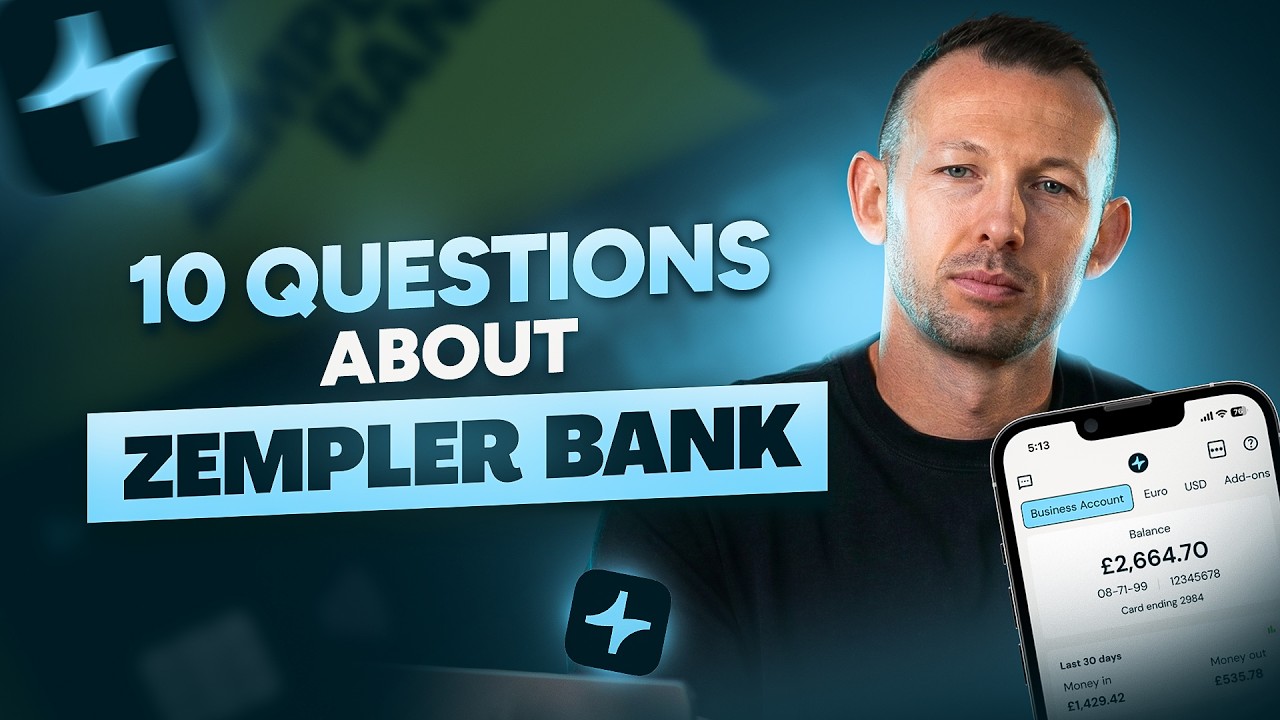
What Is Zempler Bank Business Account and How Does It Work?
How the Account Works
The account is a UK-licensed bank account, not a wallet, not an e-money product. That distinction matters because a real bank holds your money under the statutory FSCS guarantee, whereas an e-money product only safeguards it through a third party.
You hold, send, and receive funds in GBP from a single account. We confirmed the core product structure from zempler.com in April 2026.
You choose between three plan tiers, but the 35p per transaction fee applies to all of them. Business Go is free monthly and includes 3 free transactions before the 35p charge kicks in. Higher tiers (Extra at £9/month, Pro at £19/month) add features without removing the per-transaction charge.
The free plan includes invoice creation, receipt capture, cash flow tracking and Making Tax Digital tools in the app. Accounting software connections to Xero, QuickBooks and Sage run via Open Banking rather than native feeds.
Interest is available through a savings pot on the paid Business Pro tier (£19/month) at 0.5% AER, not paid on the free current-account balance. Check the current rate at zempler.com.
Who the Account Is Designed For
Zempler is built for you if you want a legitimate FSCS-protected bank account but face barriers elsewhere: no credit history, no trading history, or a previous decline. What sets it apart: it opens an account without checking your credit file, when nearly every other protected bank checks first.
If your business makes fewer than 15 outgoing payments per month, the per-transaction cost stays manageable. Above that volume, Starling’s zero-transfer model becomes the cheaper choice.
Zempler is built for domestic UK banking with FSCS protection and built-in tools. Businesses with heavy international payments or complex invoicing needs are better served elsewhere. It stays domestic-only by design rather than trying to handle multiple currencies.
How to Open an Account
You apply digitally through the app, not on paper. You provide photo ID for identity verification. No credit check is run. No minimum trading history is required. Newly registered sole traders and recently incorporated LTDs apply through the same process as established businesses.
Confirm current document requirements and accepted business structures at zempler.com before starting your application. Verification requirements can change; check the current eligibility page rather than relying on third-party summaries.
Account Plans and Pricing
Free and Paid Plans
You choose between three plan tiers when you open the account. Business Go costs £0/month. Business Extra costs £9/month. Business Pro costs £19/month. We confirmed current plan pricing from zempler.com in April 2026.
What the higher tiers buy you is a bigger free allowance: 3 outgoing payments a month on Go, 20 on Extra, 500 on Pro. Past that it is 35p a payment on every plan.
So the real question is not the headline fee but how many payments you send before the drip charge starts. When weighing Business Go against Starling (also free), the decisive factor is transfer cost, not plan price.
| Plan | Monthly Fee | Included Transactions | After Allowance |
|---|---|---|---|
| Business Go | £0 | 3 free | 35p each |
| Business Extra | £9 | 20 free | 35p each |
| Business Pro | £19 | 500 free | 35p each |
| ATM withdrawals | £2 per withdrawal | ||
| Cash deposits | 0.55% of amount, £4 minimum | ||
Monthly Fees. You pay nothing monthly on Business Go, the entry tier is genuinely free. Business Extra costs £9/month and Business Pro costs £19/month. The higher tiers add features but do not change the per-transaction model.
If you are a sole trader or small business starting out, Business Go is the right entry point. The monthly fee difference between Go and Extra represents 25 additional transactions on Go before the cost equalises. Confirm current plan features at zempler.com before choosing a tier.
Transaction and Transfer Fees
Each outgoing payment after the 3 free monthly allowance costs 35p per transaction. We confirmed this from Zempler’s published pricing in April 2026. Before opening, model this charge against your actual payment volume.
If you make 10 outgoing payments a month, you pay £2.45 in transaction fees. The same volume on Starling costs £0; on Tide it costs £2.00. At 30 payments, Zempler costs £9.45 vs £0 on Starling and £6.00 on Tide.
The breakeven against Tide sits at around 6 payments per month. Below that, Zempler is cheaper. Above it, Tide wins.
Zempler does not undercut Starling on transfer costs. The real cost gap is at volume.
Cash Deposit, ATM and Card Charges
ATM withdrawals cost £2 each. Cash deposits cost 0.55% of the amount deposited with a minimum of £4. Depositing £200 costs £4; depositing £727 or above costs exactly 0.55%. We confirmed these figures from zempler.com in April 2026.
You pay no extra charge for card payments at point of sale.
The free Business Go plan adds a non-sterling fee on overseas card spending, but Business Extra and Business Pro waive it, so card spend abroad is fee-free on those paid tiers. Confirmed from zemplerbank.com, June 2026.
Banking Features
Payments, Transfers and Direct Debits. UK bank transfers cost 35p each after the 3 free monthly allowance. Card payments are included at no extra charge.
Direct debit support and standing order availability should be confirmed at zempler.com, as we could not verify current terms from publicly available primary sources.
Limited companies can apply for a business overdraft, up to £10,000 subject to eligibility, as part of account opening.
Sole traders are not eligible at application but qualify after holding the account for three months, when Zempler makes contact. Confirmed from zemplerbank.com, July 2026.
Accepting Card Payments (Tap to Pay). Zempler added Tap to Pay in July 2026, so you can take contactless card payments straight through the app, no separate reader to buy or charge. It runs on iPhone XS or later (iOS 16.7+) and Android 11+ with NFC.
It is free to every Zempler Bank business customer: the feature runs on Stripe’s Tap to Pay technology, so you pay only Stripe’s standard card-present processing rate, nothing extra to Zempler.
Setup links your Stripe account from inside the Zempler app. The first payout typically takes around seven days to land, then three working days after that, with a £1 minimum. We confirmed this from zemplerbank.com in July 2026.
Cards and Expense Cards
You receive a Mastercard debit card with the account. ATM withdrawals cost £2 each. We confirmed the debit card and ATM fee from zempler.com in April 2026.
If you need to issue expense cards to team members, you must confirm availability directly: Zempler’s public materials do not detail multi-card issuance for staff in April 2026. Verify current card options at zempler.com before opening, particularly if team cards are central to your setup.
Accounting Integrations and Business Tools
The Xero, QuickBooks, or Sage connection runs over Open Banking, not a native direct feed. The trade-off is reliability: an Open Banking link is more likely to drop out than a direct one. We confirmed these integrations from Zempler’s published features in April 2026.
Open Banking connections rely on a third-party authorisation that expires periodically. When it lapses, the feed stops syncing and you have to log back in to reconnect it.
If your accountant relies on Sage, note one distinction. Tide offers a direct Sage bank feed: a native connection, not Open Banking. Zempler’s Sage integration runs via Open Banking, which adds a dependency on API continuity.
Invoice creation, cash flow tracking, integrated accounting and Making Tax Digital tools are included in the app on the free plan. These are genuinely useful native tools, though not as deep as a dedicated accounting platform like Xero or Sage.
Multi-User Access and Spending Controls. If you need multi-user access or role-based permissions, you must verify the detail directly: Zempler’s public materials did not spell out the access model in April 2026.
Confirm current access controls at zempler.com before opening if team spending controls are part of your setup.
Savings, Credit or Other Extra Features
Interest comes via a savings pot on the paid Business Pro tier (£19/month), paying 0.5% AER, not on the free current-account balance. Confirm the current rate and any conditions at zempler.com, as rates can change.
We confirmed the Pro-tier savings pot from zempler.com in April 2026.
The genuine credit feature here is the overdraft: up to £10,000, subject to eligibility. Limited companies can apply as part of account opening; sole traders qualify after holding the account for three months, when Zempler makes contact. We confirmed these details from zemplerbank.com in July 2026.
International Features
Sending International Payments. If you plan to send international payments, you must confirm support and fees with Zempler directly, the public pricing page did not detail cross-border transfers in April 2026.
Verify at zempler.com whether international bank transfers are supported and what fees apply before attempting a cross-border payment.
You are using a domestic UK bank account here. International payments are not Zempler’s strength.
Receiving International Payments. If you expect to receive international payments in foreign currencies, you need to confirm support directly, Zempler’s public materials did not detail inbound FX handling in April 2026.
Verify at zempler.com whether inbound international payments are supported on your account.
Foreign Exchange Fees and Currency Support. If FX costs feed into your margins, you must check current rates and supported currencies at zempler.com before sending: the public pricing page did not list FX fees in April 2026.
Verify what you pay before sending an international payment, particularly on tight-margin transactions.
When international payments are a regular part of your business, Zempler is not the right primary account. Accounts built specifically for multi-currency management, such as Airwallex or Wise, give you better rate visibility and fee control.
Eligibility and Account Limits
Who Can Apply. You can apply as a sole trader, freelancer, contractor, or SME. No credit check is run as part of the application process. No credit or trading history is required. We confirmed the no-credit-check entry from Zempler’s published eligibility criteria in April 2026.
Verify current eligibility at zempler.com before starting your application, as criteria can change. The no-credit-check entry is the feature that makes Zempler useful for newly registered businesses that other FSCS-protected banks would decline at application stage.
Supported Business Types. You can open Zempler as a sole trader, limited company, or SME. Confirm the full list of accepted business structures at zempler.com before applying, as eligibility can change.
For businesses that hold significant working capital and want FSCS deposit protection, Zempler’s full banking licence means deposits up to £120,000 per eligible depositor are covered by the statutory FSCS guarantee, the same class of protection as a high-street bank.
Account Limits and Restrictions. If you handle high-value or time-sensitive payments, you must verify daily spending limits and transfer ceilings directly, these were not detailed on Zempler’s public pricing in April 2026.
Confirm limits at zempler.com before relying on the account for those transactions.
Overdraft access (up to £10,000) is not automatic. Limited companies can apply as part of account opening; sole traders qualify after three months.
If you need an overdraft buffer sooner than that, confirm current timelines at zempler.com before opening.
App, Online Banking and User Experience
Mobile App Experience
You manage the account through the mobile app: balance, invoices, receipts, and cash flow live in one place. We confirmed app availability from zempler.com in April 2026.
If your business makes fewer than 15 outgoing payments a month, the app covers the basics you need: card freeze, transaction history, and receipt attachment.
If mobile-first banking with instant notifications and advanced expense tools is your priority, compare current app reviews before committing.
Web and Desktop Access. You can manage your account from a web dashboard, not just the app.
If you prefer to handle invoices, cash flow, and accounting integrations on a desktop, check what the web platform offers at zempler.com before opening: the public materials do not spell out how much you can do there.
Ease of Day-to-Day Account Management
Day-to-day use involves monitoring your balance, tracking outgoing payments against the 3 free monthly allowance, and capturing receipts digitally. In practice, it suits a business making fewer than 15 outgoing payments a month, rather than one sending payments many times a day.
When you make more than 3 outgoing payments in a month, tracking the per-transaction cost against Starling (free at any volume) is the main ongoing management task. If you find yourself regularly exceeding 15 payments per month, the cost calculation shifts against Zempler.
Customer Reviews and Reputation
What Customers Like
You will see Zempler holding a 4-star Trustpilot rating, which puts it ahead of most challenger banks but below Starling on direct comparison. We confirmed this from our research in April 2026; check Trustpilot directly for the current rating before deciding.
The praise is worth reading closely, because it tells you who this account is really for. The people rating Zempler highly are not praising slick features or a polished app.
They are relieved to have been accepted at all: operators turned down elsewhere, or businesses that wanted FSCS protection without a credit search on their file.
In other words, the 4 stars measure gratitude for access, not satisfaction with the toolkit. If you are choosing Zempler for the no-credit-check open, that signal is reassuring. If you are expecting Starling-grade polish, the reviews are quietly telling you to look elsewhere.
Common Complaints
The complaints cluster where you would expect for any regulated digital bank: accounts frozen mid-flow during identity checks, and support that takes too long to reply when that happens.
Neither is unique to Zempler. But both matter more here than at a high-street bank, because there is no branch to walk into and, as we cover below, no phone line to call.
So treat the rating as perishable, not permanent. Support quality at digital banks drifts month to month, and an average score papers over the bad weeks.
Before you move your trading account across, spend ten minutes reading the most recent Trustpilot reviews, not the headline number we confirmed in April 2026. The reviews from the week you apply will tell you far more about what you are walking into.
Customer Support and Service
Support Channels and Availability
There is no phone line. As far as the public materials confirm, you reach Zempler support through in-app messaging and online channels only, and that is the detail worth weighing before you commit.
If a supplier payment stalls or your card stops working on a Friday afternoon, you cannot pick up the phone and escalate; you wait for a reply in a chat thread.
For a business running time-sensitive payments, that is a genuine operational limitation you have to plan around. Confirm current support hours and channels at zempler.com before opening.
It compounds the complaint pattern we flagged above. Slow responses hurt more when messaging is the only route in, so if same-day resolution matters to how you trade, factor that in before you switch your main account across.
Help Centre and Self-Service Resources. You can browse Zempler’s help centre for guidance on account management, fees, and integrations. Verify current documentation coverage at zempler.com before committing if your use case is non-standard.
Security, Regulation and FSCS Protection
Regulation and Authorisation
When your funds sit with Zempler, they sit with a PRA-authorised UK bank, not an e-money issuer. We confirmed the licence and regulatory status from Zempler’s terms and the FCA register in April 2026. Verify current authorisation at the FCA register before you rely on this.
Where Zempler differs from Tide or ANNA is the licence itself. Zempler took its own UK banking licence in 2021. Tide reaches FSCS cover through its partner bank ClearBank rather than a licence of its own, and ANNA (PayrNet EMI) is safeguarded e-money, not FSCS.
For the money you hold, the practical outcome is the same £120,000 statutory FSCS cover either way; the licence distinction mainly matters if you prefer your bank to hold its own authorisation rather than lean on a partner.
FSCS Protection or Safeguarding
If you hold money with Zempler Bank, it is FSCS-protected. As a full UK bank regulated by the PRA, eligible deposits are protected by the Financial Services Compensation Scheme up to £120,000 per eligible depositor. That is the statutory deposit guarantee. Not e-money safeguarding.
It is worth being precise when comparing Zempler to Tide. Tide is also FSCS-protected to £120,000, because your money is held by its partner bank ClearBank. The difference is where the licence sits: Zempler holds its own, Tide relies on ClearBank’s.
If you hold £30,000 in working capital, both cover it in full, so pick on the licence question and the day-to-day features, not the headline number. Verify current FSCS details at zempler.com and the FSCS website before you open an account.
Security Features
The account sits inside full banking regulatory requirements: Zempler is PRA-regulated, not an e-money issuer. Specific in-app security features, two-factor authentication, card freezing, and transaction alerts, were not confirmed from primary sources in April 2026.
Verify current security features at zempler.com before you open.
Who Zempler Bank Business Account Is Best For
Best Use Cases
Zempler works best when you make fewer than 15 outgoing payments a month and want built-in invoicing and accounting at no monthly fee. Below that volume, the per-transaction cost is manageable; above it, Starling’s zero-transfer model is almost always cheaper.
If your credit history is limited, the no-credit-check entry is the clearest differentiator. If you were turned down elsewhere, or if you don’t want your credit file affected, Zempler is one of very few FSCS-protected banks that doesn’t require this.
Consider the scenario: you’ve just registered your company and want somewhere to hold your first revenue while you build up a trading record. No credit history, no trading history required, FSCS protection from day one. That combination is what Zempler offers.
When to Consider Alternatives
Consider Starling if you make more than 15 outgoing payments per month and need FSCS protection. Starling charges nothing for domestic transfers at any volume and holds a full UK banking licence. The trade-off: no no-credit-check open and no built-in accounting tools.
Tide is your alternative if your accountant relies on a direct native Sage or Xero bank feed. Tide offers native integrations that Zempler’s Open Banking connection does not match, and it is FSCS-protected too, via its partner bank ClearBank, so you are not trading away deposit cover to get them.
Allica is worth considering only if you hold significant cash reserves and need competitive savings rates alongside FSCS protection. Allica is better suited to established SMEs with substantial balances.
Zempler Bank Business Account vs Alternatives
Zempler vs Starling
Both hold full UK banking licences with FSCS protection up to £120,000. Starling charges nothing for domestic transfers at any volume. Zempler charges 35p after 3 free per month.
If you make more than 6 outgoing payments per month, Starling is cheaper on transfer costs alone. If you need a no-credit-check open or built-in invoicing and accounting tools, Zempler offers both. Starling offers neither.
Starling suits businesses where transfer volume is the main variable. Zempler suits businesses that need the no-credit-check open or want built-in invoicing and accounting tools. That’s the practical split.
Zempler vs Tide
Start with what is no longer true: you do not give up FSCS by choosing Tide. Both are protected to £120,000, Tide through its partner bank ClearBank, Zempler on its own licence. So this one comes down to features and cost, not deposit safety.
Tide gives you a direct native Sage or Xero feed and cheaper transfers at volume, 20p each after five free a month against Zempler’s 35p after three. Zempler matches Sage only over Open Banking.
What Zempler gives you back is the no-credit-check open and free Making Tax Digital tools. So: pick Tide if a native accounting feed or transfer cost drives the decision; pick Zempler if you want in without a credit search, or prefer a bank on its own licence.
Zempler vs Allica
Allica Bank pays competitive interest on business savings pots at up to 4.08% AER (confirmed from Allica’s website, April 2026; verify current rates at allica.bank). FSCS-protected with dedicated relationship managers. The current account is free if you maintain a £50,000+ average balance.
If you hold significant cash reserves and want the best savings rate, Allica is the stronger choice. If you want a simple day-to-day account without a large balance requirement, Zempler is simpler and more accessible.
We have a full comparison across all options in our best business bank accounts guide.
Final Verdict: Is Zempler Bank Business Account Worth It?
Zempler holds its own on feature set, not just as a fallback for businesses turned down elsewhere.
It combines a full UK banking licence and FSCS protection with built-in invoicing, accounting and Making Tax Digital tools on the free plan, plus a door that opens without a credit check. Most challenger banks give you some of that, rarely all of it.
That combination makes it a solid pick for a wider range of businesses than just the newly registered or previously declined, though it suits them especially well.
The 35p transaction fee is the one thing worth running the numbers on. Above roughly 15 outgoing payments a month, Starling’s zero-transfer model gets cheaper, though you give up the no-credit-check open and built-in tools to get there.
Model the transaction cost before opening. At £0/month with 35p per transaction, the annual cost depends entirely on your payment volume.
| Payments per month | Zempler annual cost | Starling annual cost |
|---|---|---|
| 10 | £29.40 | £0 |
| 30 | £113.40 | £0 |
| Verified 21 April 2026. | ||
Zero beats 35p every time. Not the same deal as Starling.
Frequently Asked Questions
Is Zempler Bank FSCS Protected?
Yes. Zempler Bank holds a full UK banking licence and eligible deposits are protected by the Financial Services Compensation Scheme (FSCS) up to £120,000 per eligible depositor. This is the statutory deposit guarantee, the same class of protection as a high-street bank. Tide is FSCS-protected to the same £120,000 too, but through its partner bank ClearBank rather than a licence of its own; Zempler holds the licence itself. We confirmed Zempler’s banking licence and FSCS status from Zempler’s published terms in April 2026.
What Is the Difference Between Cashplus and Zempler Bank?
Cashplus and Zempler Bank are the same business at different points in time. Cashplus acquired a full UK banking licence in 2021 and rebranded to Zempler Bank in 2024. The regulatory structure (full banking licence, FSCS protection) dates from the 2021 licence acquisition. If you had a Cashplus account, it’s now a Zempler Bank account. The rebrand did not change the underlying protection structure.
Does Zempler Pay Interest on Business Account Balances?
Not on the free current account. Interest is available through a savings pot on the paid Business Pro tier (£19/month), which pays 0.5% AER. The free Business Go plan does not pay interest on your current-account balance. We confirmed this from Zempler’s published information in April 2026. Confirm the current rate and any conditions at zempler.com, as rates can change.
How Much Does It Cost to Use Zempler?
The Business Go account has no monthly fee. The per-transaction cost is 35p after the first 3 outgoing payments each month. ATM withdrawals cost £2. Cash deposits cost 0.55% of the amount deposited with a £4 minimum. We confirmed these figures from Zempler’s published pricing in April 2026. Verify current rates at zempler.com before opening the account. For high-transfer-volume businesses, model your monthly transaction count before committing. At 30 payments per month, fees reach £9.45.
Can You Open a Zempler Account Without a Credit Check?
Yes. Zempler doesn’t run a credit check as part of the application process. No credit or trading history is required. This applies to sole traders, freelancers, contractors, and SMEs. We confirmed the no-credit-check entry from Zempler’s published eligibility criteria in April 2026. Verify current eligibility at zempler.com before starting your application, as criteria can change. The no-credit-check entry is the feature that makes Zempler useful for newly registered businesses that other FSCS-protected banks would decline at application stage.
What Is the FSCS Limit for Zempler Bank?
The FSCS protects eligible deposits up to £120,000 per eligible depositor per authorised institution. Zempler Bank holds a full UK banking licence regulated by the PRA and FCA, so the standard £120,000 statutory FSCS limit applies. This is the statutory deposit guarantee, not e-money safeguarding. Verify current FSCS terms at the FSCS website and at zempler.com.
How we reviewed Zempler Bank
What we assessed. We evaluated Zempler Bank on pricing, contract terms, features, and eligibility. These are the factors that matter most to UK small businesses considering this provider.
Data sources. Zempler Bank’s pricing page, terms, and product docs were checked directly in April 2026. No comparison sites, no press releases, no affiliate material. FCA register cross-checked for regulatory status.
Update cadence. We re-verify this page at least monthly, and whenever a provider changes pricing, eligibility, or terms. The verification date on the page reflects the most recent full review. Some links on this page are affiliate links, see our editorial policy.