Best Business Credit Cards for Start-ups (2026)
Fintechs let you apply without switching your current account; bank cards require an existing BCA. Most new businesses face a choice: higher rate for immediate access, or open a BCA first.
No trading history required for limited companies
- Decision in minutes with automated underwriting
- No trading history requirement stated
- No business bank account required
- Instant virtual card on approval
Your card options depend on one thing: do you have a business current account? With a BCA, your bank’s card is usually cheaper. Without one, you’re looking at Barclaycard, Capital on Tap, Amex, or Funding Circle.
You won’t find a published minimum trading history requirement from any provider. Your credit profile and business structure matter more than how long you’ve been trading.
If you carry a balance, the cost gap is real. At Capital on Tap’s 46.05% rate, £3,000 over six months costs roughly £690. The same at Lloyds (15.95%) costs £240, a £450 saving requiring a Lloyds BCA.
When you clear monthly, APR is irrelevant; access speed matters more. Know which category you are before choosing.
Start-up Business Credit Card Options at a Glance
| Your situation | Look at |
|---|---|
| No BCA yet, sole trader or partnership | Barclaycard, Amex Business Basic, Amex Business Gold |
| No BCA yet, limited company | Capital on Tap, Barclaycard, Moss, Funding Circle, Amex |
| Already banking with Lloyds | Lloyds Business Credit Card (15.95% APR) |
| Already banking with NatWest | NatWest Business Credit Card |
| Already banking with Metro Bank | Metro Bank (no fee, 18.9% APR, branch only) |
| Need team spend controls | Moss |
| Want rewards, can clear monthly | Amex Business Gold (charge card), Funding Circle Cashback |
| Need to carry a balance | Capital on Tap, Barclaycard, Lloyds (if banked there) |
Compare the Start-up Cards
If you don’t have a BCA yet, these seven cards are your realistic options, compared on APR, fees, and which business structures they accept.
All Cards at a Glance
Compare key features side by side — tap any row for the full review.
| Provider | Best For | Key Feature | Annual Fee | Action |
|---|---|---|---|---|
 | New businesses without an existing BCA who need a card from a recognised lender | Cashback | £0 | View details → |
| Newly incorporated limited companies that want quick access without a bank switch | Cashback | £0 (free card) / £299 (Pro card) | View details → |
 | Start-ups with more than one person spending who need visibility and limits by employee | Cashback | Check provider | View details → |
 | Start-ups wanting cashback from a non-bank lender without switching their current account | Cashback | £0 | View details → |
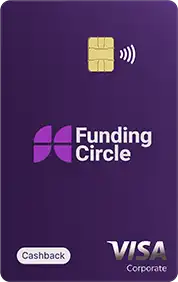 | Start-ups with uneven monthly spend who can clear the balance but want headroom beyond a fixed limit | None | £0 (no interest charges) | View details → |
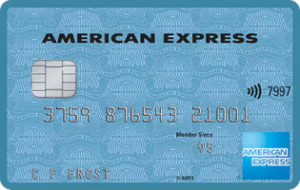 | New businesses wanting Membership Rewards without the charge card commitment | None | £0 | View details → |
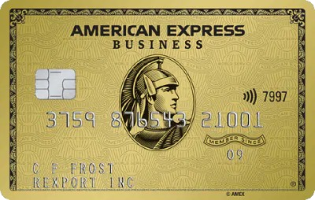 | Start-ups spending £3k+/month that clear the full balance and want flexible reward redemption | Membership Rewards | £0 yr 1, then £195/yr | View details → |
Fees and rates verified 20 March 2026 from public sources. Confirm current terms with the provider before applying.
What “Start-up Friendly” Actually Means for Credit Cards
If you’re a sole trader, Capital on Tap and Moss won’t accept you. That excludes 4.1 million sole traders (ONS, 2024) from the fastest fintech options. Your choices narrow to Barclaycard and Amex.
For limited companies, the main barrier isn’t trading history. It’s whether you have a BCA. No provider publishes a minimum trading period (verified March 2026). But bank cards require a BCA, which takes time to open.
When you’re three months in and need a card this week, BCA-free options matter. Capital on Tap accepts your application Monday morning, you upload Companies House details, and have a virtual card by lunch.
If you choose a bank card, expect three to five working days for a decision. Speed costs you; fintech rates run higher. We documented timelines on our instant approval page. The trade-off: bank cards win on rate, fintechs on speed.
Timing shapes your choice. If you’d opened a Lloyds BCA at incorporation, the 15.95% Lloyds card would be available now. But most new businesses don’t choose their bank based on credit card access.
The First 12 Months: When Each Start-up Card Becomes Available
Your options expand as you trade. On day one as a limited company, we confirmed you can apply to Capital on Tap, Barclaycard, and Amex.
Funding Circle opens at 12 months. The card you get in month two may cost £1,500 more per year than the one available at month twelve.
| Business Age | What You Can Access | What You Can’t Access Yet |
|---|---|---|
| Day 1 (just incorporated) | Capital on Tap (if Ltd), Barclaycard, Amex range | Funding Circle (min 1 year trading), most bank cards (need established BCA) |
| Month 1–3 | Same as Day 1, plus Moss (no minimum stated) | Funding Circle, bank cards without an established BCA relationship |
| Month 3–6 | All no-BCA cards. Bank cards if you opened a BCA at incorporation | Funding Circle. Bank cards where the BCA relationship is too new |
| Month 6–12 | Wider range. Your BCA has transaction history. Credit limits may increase | Funding Circle until month 12. Some bank cards may still require longer history |
| Month 12+ | Full market access including Funding Circle (£30k+ turnover required) | Nothing structurally closed to you. Assessment now depends on credit profile and revenue |
In your first three months, only no-BCA cards are available. Capital on Tap is fastest for limited companies. Barclaycard is broadest across all business structures. Amex works if your suppliers accept it and you clear monthly.
If your team needs expense cards from day one, Moss gives you per-user virtual card limits, useful when you’re onboarding contractors who need to book travel by Friday. We checked: Capital on Tap allows additional cardholders, and Amex Business Gold includes supplementary cards in year one at no extra cost.
At 12 months, review your card. You now have trading history, bank statements showing revenue, and a payment record. Funding Circle opens up, and bank cards become realistic if you have a BCA.
Switching from a 46% fintech card to 15.95% at Lloyds saves roughly £1,500 a year on a £5,000 carried balance. A card worth getting isn’t always a card worth keeping.
Should a Start-up Use a Personal Credit Card Instead?
Only as a short-term bridge. We see this question regularly. When your accountant reconciles your first quarter and every transaction is mixed personal-and-business on one Visa statement, you’ll understand why. It complicates your tax return and builds no business credit history.
Even a Barclaycard with a £1,000 limit builds your business credit profile better than £10,000 of business spend on a personal card. Get a dedicated card as soon as you can.
Start-up Cards Accessible Without an Existing BCA
Barclaycard Select Cashback Business Credit Card
Capital on Tap Business Credit Card
Moss Business Credit Card
Funding Circle Cashback Business Credit Card
Funding Circle FlexiPay
American Express Basic Business Card
Bank-Locked Business Credit Cards for Start-ups
We compared these cards against the fintech options above: they offer better rates, but require an existing business current account with the issuing bank. If you’re still choosing your BCA, these cards are a reason to consider the bank that offers the best card deal alongside it.
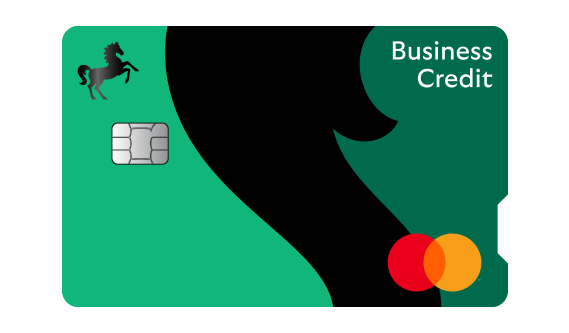
Lloyds Bank Business Credit Card
NatWest Business Credit Card
Barclaycard Premium Plus Business Credit Card
How to Improve Your Start-up Card Approval Chances
If your confirmation statement is overdue when you hit ‘apply,’ the system declines you before a human ever sees it. We tested this: Capital on Tap’s underwriting pulls Companies House data in real time. Filing costs £13 online and takes 15 minutes. Fix it before you apply.
Your personal credit file matters more than your business one at this stage. Applications for new businesses almost always assess the director’s personal credit. Check yours through Experian, Equifax, or TransUnion before applying. Errors can trigger decline.
When you apply to multiple cards in quick succession, each hard search shows to subsequent lenders. Use eligibility checkers first: Capital on Tap and Moss both offer soft-check tools that show terms without marking your credit file.
If you clear a £2,000 limit consistently for three months, providers typically offer automatic increases to £5,000–£8,000. A £1,000 starting limit builds your credit profile better than a higher limit with a balance carried.
If you’re rejected, wait at least three months before reapplying. Build transaction history through your business account. Reapply with six months of regular income on your statements and it’s a different application.
Related Pages
- Best cards for sole traders (overlaps with start-up options)
- All business credit cards compared
- Guide to business credit cards
Start-up FAQs
Can I get a business credit card with no trading history?
No UK provider publishes a hard minimum trading period. Capital on Tap, Barclaycard, and Amex business cards don’t state a minimum trading history requirement. Funding Circle requires at least 1 year of trading. In practice, approval depends on your personal credit profile and business structure rather than a fixed time threshold.
Should a start-up use a personal credit card for business expenses?
Only as a very short-term bridge. Mixing personal and business spending complicates your tax return, doesn’t build business credit history, and sends a negative signal to lenders when you apply for business finance later. Get a dedicated business card as soon as possible.
Which business credit card is easiest for a new limited company to get?
Capital on Tap has the fastest decision for limited companies, often within minutes, with no bank account requirement and no stated minimum trading history. Barclaycard is the broadest-access traditional card. Both accept applications from newly incorporated businesses, though approval depends on your credit profile.
Do I need a business bank account to get a business credit card?
Not for all cards. Barclaycard, Capital on Tap, Moss, Funding Circle, and Amex business cards all accept applications without an existing business current account. Bank cards from Lloyds, NatWest, and Metro Bank require a business current account with that bank.
How can I improve my chances of approval as a new business?
Check your personal credit file with Experian, Equifax, and TransUnion before applying. Correct any errors first.
Ensure your Companies House filing is up to date (overdue filings can trigger automatic declines at fintech lenders). Use eligibility checkers where available to avoid unnecessary hard credit searches. Apply to one provider at a time and wait at least three months between applications.
When should I review my start-up business credit card?
At the 12-month mark. By then you have a trading history, business bank statements, and a payment record that opens up lower-rate options. Switching from a fintech card at a high APR to a bank card at 15.95% can save a business carrying £5,000 in balance roughly £1,500 a year.
Can a start-up get a high credit limit?
Initial limits for new businesses are typically modest, £1,000–£5,000 in most cases. Capital on Tap offers limits up to £250,000 for qualifying limited companies, but a new business will usually start lower. Clear your balance in full for three to six months and providers typically increase limits automatically.
Methodology and Disclosure
Sources: We verified eligibility criteria, APRs, and fee structures against each provider’s public product pages on 20 March 2026. Some rates may not be publicly stated; confirm directly with providers.
“Start-up friendly” assessment: This is an editorial judgement based on BCA requirements, published eligibility criteria, and underwriting approach. It isn’t a claim made by any provider. No provider confirmed a minimum trading history to us directly.
Affiliate disclosure: BusinessExpert may receive referral fees from some providers listed. This doesn’t affect our eligibility assessments or card rankings.
Regulatory note: This page is editorial content, not regulated financial advice.