Guide to Business Credit Cards (2026)
A business credit card separates spending from personal finances and builds a credit profile in your business name. Most bank cards require an existing business current account with the issuer.
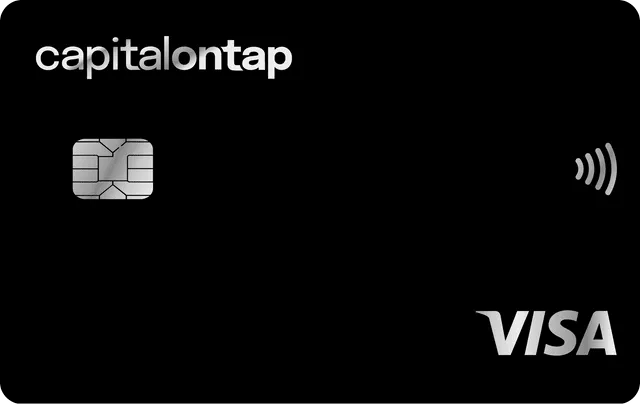
No annual fee, 1% cashback, limits up to £250k
- 1% cashback on all spend
- No annual fee (free tier)
- Credit limits up to £250,000
- No bank account switch required
Which card suits you depends on whether you carry a balance, which bank you use, and whether your suppliers accept Amex. The UK market has about a dozen mainstream options, dividing by what they optimise for: low interest, rewards, or open access.
If you already know the basics, the full comparison is a faster starting point.
What a Business Credit Card Actually Does
A business credit card works like a personal credit card: the provider extends a credit limit, you spend against it, and you repay monthly. The account is in the business name, spending builds a business credit file, and Section 75 of the Consumer Credit Act doesn’t apply.
Practically, this means you get a named account for business expenses, a statement separating business from personal spend, and in most cases a separate credit limit from your personal cards.
You should check your assumptions: many business cards carry higher APRs than personal cards, so don’t assume a business card equals a better rate.
Additional cardholders are usually available, which is useful if you have employees making purchases on behalf of the business. Most providers charge a small fee per additional card or include a set number free.
A business card with additional cardholders puts all expenses on one statement, categorised by cardholder, useful when your designer needs stock photography (£50/month), your account manager expenses client lunches (£200/month), and you handle software subscriptions (£800/month).
Without a shared business card, you’re chasing receipts from three people and reconciling personal card expenses against bank transfers. The operational simplicity is the underrated benefit.
Business Credit Card vs Personal Card: The Real Differences
If you’re a sole trader or small limited company, you might wonder whether you actually need a business credit card at all. Your personal card works at the same shops, earns the same type of rewards, and you already have one. Here are the practical differences that matter.
You need separation for accounting efficiency. A business card gives a single statement with only business transactions. If you use Xero or FreeAgent, a dedicated card feed saves hours of manual categorisation.
Build a business credit profile if you plan to apply for a business loan, lease equipment, or take on commercial premises in the next two years. Spending on a business card contributes; personal card spending doesn’t.
Liability structuring matters as your business grows. Your account is in the business name, which matters for record-keeping and can affect liability as you scale.
You lose Section 75 protection on a business card. Section 75 applies only to personal credit card purchases between £100 and £30,000. For disputed business purchases, your recourse is the card network’s chargeback scheme: voluntary, with shorter time limits.
If you need to dispute a purchase on a business card, your recourse is the card network’s chargeback scheme (Visa or Mastercard). Chargeback is voluntary, has shorter time limits, and carries no legal guarantee of outcome. Don’t assume business cards carry the same buyer protection as personal cards.
Our assessment: above £500 a month in business expenses, a dedicated card saves you real time and builds a financial profile. That matters for credit applications later. Below £200 a month, a personal card with clear record-keeping may be sufficient.
Business Credit Card vs Charge Card vs Corporate Card
| Type | Revolving credit? | Interest charged? | Who it suits |
|---|---|---|---|
| Credit card | Yes | Yes, if you carry a balance | Businesses that occasionally need to spread payments |
| Charge card | No | No (but late payment fees apply) | Businesses that always clear monthly and want rewards |
| Corporate card | Varies | Varies | Larger organisations with centralised expense management |
Extends a revolving credit limit. You can carry a balance from month to month, paying interest on the outstanding amount. Most UK business credit cards fall into this category. If you need the option to spread payments, this is what you want.
Requires the full balance to be cleared every month. No revolving credit, no interest, but late payment fees apply if you miss the deadline. Charge cards typically have no pre-set spending limit, which suits high-spending businesses. Amex Business Gold and Platinum are the main UK examples. Since January 2026, Amex Gold has a flexible payment option that blurs this distinction slightly.
Issued to larger organisations (typically 50+ employees) rather than small businesses. Terms are negotiated directly with the provider. If you have fewer than 20 employees, you’re almost certainly looking at a business credit or charge card, not a corporate card.
How to Choose a Business Credit Card
Four questions narrow the field before you look at any specific card.
- Do you carry a balance? If yes, APR is the primary metric. The Lloyds card (15.95% representative APR) is the lowest available to most businesses. If no, the cost of borrowing is irrelevant and rewards become the deciding factor.
- Do you need rewards? If yes, Amex cards offer the strongest Membership Rewards programme. Santander and Capital on Tap offer cashback on Visa/Mastercard. If no, a no-fee card with a low APR is usually the cleaner choice.
- Do your suppliers accept Amex? Amex has acceptance gaps in the UK, particularly with smaller suppliers and some government bodies. If a significant share of your spend goes to suppliers who don’t take Amex, Amex rewards won’t translate to actual value.
- Do you have a traditional bank account? Most bank-issued cards require a business current account with the same provider. If you bank with a fintech (Starling, Monzo, Tide), your options narrow to Barclaycard, Capital on Tap, the Amex range, and a small number of fintech cards.
The Bank Account Requirement for Business Credit Cards
Most bank-issued business credit cards require an existing business current account with the same bank. We verified this against each provider’s eligibility pages: Lloyds, HSBC, NatWest, Santander, and Metro Bank all have this requirement. That means the Lloyds card’s market-leading APR is only available if you already bank with Lloyds.
If you bank with a fintech provider or don’t want to switch, you’re limited to cards without an existing-account requirement: Barclaycard Select, Capital on Tap, the full Amex range, and fintech cards. We cover sole trader eligibility separately. Several cards exclude them.
Barclaycard is the only major traditional bank card without an existing-account requirement, which is why it appears on most “open access” shortlists despite its higher APR. We update these eligibility checks quarterly.
If your bank account is with a fintech and you want to avoid switching, your VAT bills and supplier invoices will need a card that doesn’t require an existing high-street account. Capital on Tap and Amex are the main options.
Multiple applications leave visible marks
Each application triggers a hard credit search, which other lenders can see. Applying to three cards in the same month signals financial stress to underwriters, even if you’re approved for all three. Decide which card you want before applying, and space applications at least three months apart if you need to try more than one.
Business Credit Card Terms Explained
The interest rate that at least 51% of successful applicants receive. Your actual rate may be higher depending on your credit profile. A card advertised at 19.9% representative APR may give you a rate of 24.9% if your business credit file is thin. The representative APR is a comparison benchmark, not a guarantee.
The interest rate applied to purchases when you carry a balance. Usually the same as the representative APR, but some cards have separate rates for purchases, balance transfers, and cash advances. Always check all three if you plan to use the card for more than straightforward purchases.
Moving an existing card balance to a new card, typically to benefit from a lower rate. 0% balance transfer offers are common on personal credit cards but extremely rare on business cards. If you’re carrying expensive debt on a business card, the practical options are switching to the lowest-APR card available or paying the balance down directly. See the balance transfer guide for the full picture.
The maximum balance the provider will allow on the account. Limits on business cards vary widely, from £1,000 on entry-level cards to £250,000+ on Capital on Tap for businesses with strong financials. Your initial limit is set at application. You can usually request an increase after six to twelve months of on-time payments.
The smallest amount you can pay each month without incurring a missed-payment penalty. Paying only the minimum means interest compounds on the remaining balance. On a card at 20% APR, carrying a £5,000 balance and paying only the minimum will cost significantly more than the headline rate suggests over a twelve-month period.
What to Check Before Applying for a Business Credit Card
- Does the card require a business current account with the same provider?
- Is your business structure eligible? (Some cards exclude sole traders or require Ltd registration.)
- What is the minimum turnover requirement?
- Is there an annual fee, and does your projected spend justify it?
- What is the interest-free period on purchases?
- Are additional cardholder fees included or charged separately?
- Does the card have a foreign transaction fee if you spend abroad?
Your First Business Credit Card: A Practical Checklist
If you have never had a business credit card before, this checklist will save you from the most common mistakes. Work through it before you apply.
Your accountant will want to see a clean business card statement at year-end. Mixing personal and supplier spend on the same card creates unnecessary reconciliation work.
- Check whether your bank offers a business credit card. If you bank with Lloyds, HSBC, NatWest, Santander, or Metro Bank, your own bank almost certainly has a card. It will usually have the lowest APR available to you because they already hold your account data. Start here.
- Confirm your business structure is eligible. Some cards are limited companies only (Capital on Tap, Funding Circle). Others accept sole traders (Barclaycard, Amex). Check before you apply: a declined application leaves a mark on your credit file.
- Calculate your typical monthly spend. Add up your regular business expenses that could go on a card: software subscriptions, fuel, office supplies, travel, advertising. This number tells you whether a rewards card or a low-APR card makes more sense. Below £1,000/month, rewards barely register. Above £3,000/month, the right rewards card can return £300–£600 a year.
- Decide whether you’ll carry a balance. Be honest. If you’ll sometimes carry a balance, APR is your primary metric. If you’ll always clear in full, APR is irrelevant and you should optimise for rewards or cashback.
- Check Amex acceptance if you’re considering an Amex card. Call your top five suppliers and ask. If three or more don’t accept Amex, go with a Visa or Mastercard card instead.
- Apply to one card at a time. Each application creates a hard search on your credit file. Multiple applications in the same month signal financial stress to lenders. Wait at least three months between applications if your first choice declines you.
If you have worked through this checklist and still feel uncertain, our full comparison page filters by business type, spend level, and bank account. It will narrow the field to two or three realistic options based on your situation.
What Credit Score Do You Need for a Business Credit Card?
You’ll likely qualify with a personal score above 650 on Experian’s scale and at least six months of trading, though most providers don’t publish minimum credit scores. We checked eligibility across all providers to confirm this baseline.
If your credit is thin or damaged, Capital on Tap and Barclaycard are more accessible than bank-linked cards. See our business credit cards for poor credit guide for more options.
How Long Does a Business Credit Card Application Take?
If you need a card urgently, fintech providers like Capital on Tap give a decision within hours and issue a virtual card immediately on approval. Bank cards take five to ten working days; Amex ships within three to five.
You’ll see the speed difference in how they underwrite: fintech lenders use Open Banking APIs, Companies House data, and credit bureau checks for automated decisions in minutes. Traditional banks rely on manual review processes, which takes days rather than hours.
When your financials are borderline, the trade-off becomes clear: automated underwriting is faster but less flexible. A bank relationship manager may approve what an algorithm wouldn’t.
Related Pages
- All business credit cards compared
- Lowest APR business credit cards
- Cashback and rewards cards
- Business charge cards
- Cards for sole traders
- Cards for start-ups
- Cards for poor credit
- Credit cards vs charge cards explained
- What is a balance transfer?
Business Credit Card Guide FAQs
Do I need a business credit card if I’m a sole trader?
You aren’t required to have one, but a dedicated business card separates your spending for cleaner tax records and builds a business credit profile. If you spend more than £500/month on business expenses, the accounting time saved usually justifies it.
Does a business credit card affect my personal credit score?
Most small business credit cards require a personal guarantee, so the application creates a hard search on your personal credit file. Ongoing use primarily builds your business credit profile, but missed payments can affect your personal score as well.
Can I get a business credit card without switching my bank account?
Yes. Barclaycard, Capital on Tap, and the full Amex range don’t require a business current account with the same provider. Most other bank-issued cards (Lloyds, HSBC, NatWest, Santander) require an existing account.
What credit score do I need for a business credit card?
Most providers don’t publish minimum scores. In practice, a personal credit score above 650 on Experian’s scale and at least six months of trading history will qualify you for most mainstream cards.
How long does it take to get a business credit card?
Fintech providers like Capital on Tap can issue a virtual card within hours. Bank cards typically take five to ten working days. Amex usually ships within three to five working days of approval.
Is Section 75 protection available on business credit cards?
No. Business credit cards don’t benefit from Section 75 of the Consumer Credit Act 1974. That protection applies to personal credit card purchases between £100 and £30,000. For disputed business card purchases, your recourse is the card network’s chargeback scheme (Visa or Mastercard), which is voluntary and has shorter time limits.
Should I get a credit card or a charge card for my business?
A credit card if you might ever need to carry a balance. A charge card if you always clear in full and want the discipline of mandatory monthly clearance. Most small businesses benefit from a credit card as the safer default.
Methodology and Disclosure
Sources: We verified card terms and eligibility criteria against each provider’s public product page on 20 March 2026. We confirmed APR figures are representative rates as published on provider pages.
Affiliate disclosure: BusinessExpert may receive referral fees from some providers linked on this page. This doesn’t affect the editorial content of this guide, which is based on publicly available product information.
Regulatory note: This page is editorial content, not regulated financial advice. We checked each card’s current terms before publication.