


As a sole trader, finding a business credit card is harder than it looks. Many of the most heavily promoted cards, including Capital on Tap and American Express Business Gold, no longer accept sole traders as of early 2026. That leaves a smaller but still compelling shortlist of cards that genuinely work for the self-employed.
This guide focuses exclusively on cards available to sole traders in 2026. Each card has been assessed for annual fees, APR, cashback rates, FX charges, eligibility requirements, and accounting software integration. If you want a broader overview first, see our guide to business credit cards.
Important update (January 2026): American Express Business Gold and Business Platinum no longer accept new sole trader applications. Capital on Tap (both Free and Pro) also requires a Limited Company or LLP. This guide covers only cards that genuinely accept sole traders as of February 2026.
- Which Business Credit Cards Accept Sole Traders in 2026?
- Sole Trader Business Credit Cards: At a Glance
- The Best Business Credit Cards for Sole Traders
- Can I Use a Personal Credit Card for My Sole Trader Business?
- What to Look For in a Business Credit Card as a Sole Trader
- Why Sole Traders Get Declined and How to Improve Your Odds
- How to Best Manage Your Business Credit Card as a Sole Trader
Which Business Credit Cards Accept Sole Traders in 2026?
The eligibility landscape changed significantly in January 2026. Before comparing rates and rewards, confirm the card you want is actually open to sole traders.
Cards that accept sole traders:
- Barclaycard Select Cashback – Open to sole traders with £10,000+ annual turnover. No Barclays account required. Start-ups accepted with a credible business plan.
- Santander Business Cashback – Open to sole traders. Requires an existing Santander Business Current Account. Maximum 2 directors or partners.
- NatWest Business Credit Card – Open to sole traders. Requires a NatWest Business Current Account. Turnover under £2 million.
- Lloyds Business Credit Card – Open to sole traders, partners, and company directors. Requires a Lloyds Business Current Account.
- British Airways Amex Accelerating Business – Open to sole traders. No business bank account required; a personal account is sufficient. Minimum personal income £20,000.
Cards not available to sole traders (listed for transparency):
- Capital on Tap Free and Pro – Limited Companies and LLPs only. Sole traders are not eligible.
- American Express Business Gold – Limited Companies and LLPs only. Changed January 2026. Existing sole trader cardholders may retain their cards but cannot reapply.
- American Express Business Platinum – Limited Companies and LLPs only. Changed January 2026.
- Funding Circle Cashback Card – Limited Companies only. Minimum £40,000 annual turnover required.
- Moss Business Card – Limited Companies, PLCs, and LLPs only.
Sole Trader Business Credit Cards: At a Glance
All figures are representative APR (variable) and correct as of February 2026. Verify current rates directly with the provider before applying.
| Card | Annual Fee | Purchase Rate | Cashback/Rewards | Interest-Free | FX Fee | Sole Trader? | Best For | Link |
|---|---|---|---|---|---|---|---|---|
| Barclaycard Select Cashback | £0 | 26.5% | 1% on spend ≥£2,000/month | 56 days | 2.99% | Yes | No-fee cashback | Visit Site |
| Santander Business Cashback | £30/yr | 18.9% variable (23.7% Rep APR) | 1% uncapped, no min spend | 56 days | 0% | Yes1 | Low APR and no FX fees | Visit Site |
| NatWest Business Credit Card | £30/card (1st year free)2 | 16.9% variable (24.3% Rep APR) | 1% fuel/EV via Mastercard Savings | 56 days | Applies | Yes2 | NatWest account holders | Visit Site |
| Lloyds Business Credit Card | £32/card (1st year free)3 | 14.9% variable (15.95% Rep APR) | 1% fuel/EV, 0.5% other (min £2,000/mth) | 56 days | 2.95% | Yes3 | Lowest APR available | Visit Site |
| BA Amex Accelerating Business | £250/yr | 26.6% variable (104.9% Rep APR) | 1.5 Avios per £1 spent | 56 days | 2.99% | Yes | Travel rewards (Avios) | Visit Site |
1 Santander requires an existing Santander Business Current Account.
2 NatWest requires an existing NatWest Business Current Account. Annual fee waived in year 1 and free ongoing if spend exceeds £6,000/year.
3 Lloyds requires an existing Lloyds Business Current Account. Annual fee waived in year 1 and free ongoing if spend exceeds £6,000/year across all linked cards.
The Best Business Credit Cards for Sole Traders
Barclaycard Select Cashback Business Credit Card
Best No-Fee Card
- Annual fee: £0
- Representative APR: 26.5% variable
- Cashback: 1% on eligible spend (min. £2,000/month); capped at £400/year
- Interest-free period: Up to 56 days
- FX fee: 2.99%
- Accounting integration: FreshBooks Plus (free)
Our Verdict: The standout no-fee business credit card for sole traders. Best for those who spend consistently above £2,000 per month and want to keep annual costs at zero. The free FreshBooks Plus plan adds meaningful value on top of the cashback, and the lack of a bank account requirement makes this the most accessible card in this comparison. Not the right choice if your monthly card spend is irregular or likely to fall below £2,000. For a full comparison of all Barclaycard business products, see our Barclaycard business credit card comparison.
Overview
The Barclaycard Select Cashback is one of the few business cards combining no annual fee with a genuine 1% cashback rate, open to sole traders without requiring you to bank with Barclays. The free FreshBooks Plus plan is a genuine differentiator: it covers invoicing, expense tracking, and time-tracking tools that would otherwise cost around £22 per month. The Barclaycard Business app has received mixed user reviews (rated around 2.3 out of 5 on Google Play as of early 2026), which is worth factoring in for day-to-day account management.
The £2,000 monthly spend threshold is the central consideration. If you consistently spend above that level, the uncapped 1% cashback and £0 annual fee make this an exceptional value proposition. If your monthly card spend is irregular or sometimes falls below £2,000, the Santander Business Cashback card earns cashback with no monthly minimum.
Pros & Cons
- No annual fee
- 1% cashback on eligible spend (market-leading for a free card in active months)
- Free FreshBooks Plus accounting plan included
- Open to sole traders and start-ups
- Up to 56 days interest-free
- No Barclays bank account required
- No cashback earned in months when spend is below £2,000
- Annual cashback cap of £400
- 2.99% foreign transaction fee
- App quality is below average based on user reviews
- Cannot apply if declined for a Barclaycard commercial card in the last 6 months
Eligibility Criteria
- Sole traders, limited companies, and partnerships
- Minimum turnover £10,000 per year
- Start-ups accepted with a credible business plan
- No Barclays bank account required
- Cannot apply within 6 months of being declined for a Barclaycard commercial card
Santander Business Cashback Credit Card
Best for Low APR and No FX Fees
- Annual fee: £30 per account (not per card)
- Purchase rate: 18.9% p.a. variable
- Representative APR: 23.7% variable
- Cashback: 1% on all spend, uncapped, no minimum monthly spend
- Interest-free period: Up to 56 days
- FX fee: None on purchases in local currency
- Cash advance APR: 27.9%
- Credit limit: £500 to £25,000
Our Verdict: The best card for sole traders who already bank with Santander, spend internationally, or have variable monthly card spend that would fall below the £2,000 Barclaycard threshold. It is the only card in this comparison with no FX fee, making it particularly valuable for sole traders who regularly buy from overseas suppliers. The lowest purchase rate (18.9% p.a.) on this list also makes it the safest option if there is any chance of occasionally carrying a balance.
Overview
The Santander Business Cashback card is the only major sole trader business card offering 1% cashback with no monthly minimum and no foreign transaction fee. Three features make it stand out from the competition. First, at 18.9% p.a. purchase rate, it carries the lowest interest rate in this comparison. Second, the zero FX fee is rare on a business card at this price point; Barclaycard charges 2.99%, which compounds quickly for sole traders buying tools, software, or services from overseas. Third, the per-account fee structure means up to three additional cardholders can be added at no extra cost.
The major limitation is the requirement to hold an existing Santander Business Current Account. If you do not already bank with Santander, you will need to open an account before applying. For sole traders already banking with Santander, this is the most cost-effective card in this comparison on a pure cost basis.
Pros & Cons
- 1% uncapped cashback with no minimum monthly spend
- No FX fees on purchases abroad
- Lowest purchase rate in this comparison (18.9% p.a.)
- £30 account fee covers all cardholders (up to 3 additional at no extra cost)
- Up to 56 days interest-free
- Available to sole traders
- Requires an existing Santander Business Current Account
- Maximum of 2 partners or directors; not suitable for larger businesses
- No accounting software integration
- Trustpilot reviews for Santander are broadly negative
- Annual fee applies regardless of card usage
Eligibility Criteria
- Must hold a Santander Business Current Account (123 or standard)
- Open to sole traders, partnerships, LLPs, and private limited companies
- Maximum 2 partners or directors
- No CCJs and no IVA in the last 6 years
NatWest Business Credit Card
Best for NatWest Account Holders
- Annual fee: £30 per cardholder (waived year 1; waived ongoing if spend ≥£6,000/year)
- Purchase rate: 16.9% p.a. variable
- Representative APR: 24.3% variable
- Cashback: 1% on fuel and EV charging only (via Mastercard Business Savings)
- Interest-free period: Up to 56 days
- FX fee: Applies (verify current rate with NatWest)
- Accounting integration: FreeAgent (free for NatWest Startup Account holders)
Our Verdict: A solid, low-friction option for sole traders already banking with NatWest. The competitive purchase rate and potentially zero annual cost make it a sensible baseline card, but it lacks the cashback breadth of Barclaycard or Santander. If cashback on general spend matters to you, those are stronger choices. If you are a NatWest Startup Account holder, the inclusion of FreeAgent adds meaningful practical value.
Overview
The NatWest Business Credit Card is a straightforward option for sole traders who already hold a NatWest business account. At 16.9% p.a. purchase rate, it has one of the lower ongoing interest rates available to sole traders on a business card. The effective annual cost is also potentially zero: the year-one fee is waived automatically, and ongoing fees are waived in any year you spend £6,000 or more (approximately £500 per month), which is a low threshold for most active businesses.
The cashback programme is limited. The 1% rate applies only to fuel and EV charging via the Mastercard Business Savings programme, not to general spend. For broad-based cashback on all purchases, Barclaycard or Santander are stronger choices.
Pros & Cons
- Competitive purchase rate (16.9% p.a.)
- Annual fee waived in year 1 and free if annual spend exceeds £6,000
- Open to sole traders
- Free FreeAgent access for NatWest Startup account holders
- Real-time spending tracking via app
- Requires a NatWest Business Current Account
- Cashback restricted to fuel and EV charging only
- Foreign transaction fee applies
- Trustpilot reviews for NatWest are broadly poor
Eligibility Criteria
- Must hold a NatWest Business Current Account
- Open to sole traders, limited companies, LLPs, partnerships, charities, clubs, and societies
- Turnover must be under £2 million
Lloyds Business Credit Card
Best for Low APR
- Annual fee: £32 per cardholder (free year 1; free ongoing if spend ≥£6,000/year across all linked cards)
- Purchase rate: 14.9% p.a. variable
- Representative APR: 15.95% variable
- Cashback: 1% on fuel and EV charging; 0.5% on other eligible spend (min. £2,000/month)
- Interest-free period: Up to 56 days
- FX fee: 2.95%
- Cash advance fee: 2.5% (min £2.50)
Our Verdict: The right choice for existing Lloyds business customers where there is any realistic chance of carrying a balance. At 14.9% p.a. purchase rate and 15.95% representative APR, it is the most cost-effective card for borrowing in this comparison by a significant margin. The cashback is a secondary benefit rather than a headline reason to choose it.
Overview
The Lloyds Business Credit Card carries the lowest representative APR in this comparison, making it the most cost-effective option if you carry a balance. For sole traders who occasionally need to spread costs over more than one month, this matters: the difference between 14.9% (Lloyds) and 26.9% (BA Amex) on a £5,000 balance is approximately £545 per year in interest.
The cashback structure mirrors NatWest: strong on fuel and EV charging (1%), moderate on general spend (0.5%), but only active in months where the account spends £2,000 or more across all linked cards. For sole traders with lower or irregular monthly spend, cashback earnings will be inconsistent. Existing Lloyds customers who also hold a Lloyds Business Current Account can apply online through Online for Business.
Pros & Cons
- Lowest APR in this comparison (14.9% p.a./15.95% rep.)
- Annual fee free in year 1 and waivable ongoing
- Open to sole traders
- Up to 56 days interest-free
- Requires a Lloyds Business Current Account
- Cashback requires £2,000 or more monthly spend across all linked cards
- 2.95% FX fee
- General cashback rate (0.5%) is lower than Barclaycard or Santander
Eligibility Criteria
- Must hold a Lloyds Business Current Account
- Open to sole traders, partners, and company directors with borrowing authority
- Must be 18 or over
British Airways American Express Accelerating Business Card
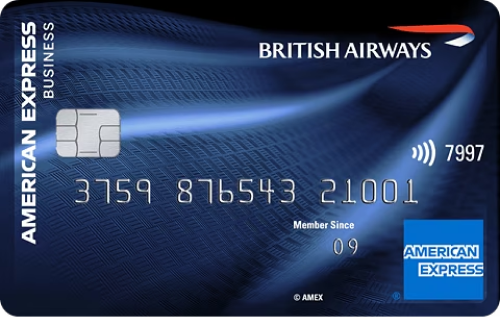
Best for Travel Rewards
- Annual fee: £250
- Purchase APR: 26.6% variable
- Representative APR: 104.9% variable (reflects annual fee in regulatory calculation)
- Earning rate: 1.5 Avios per £1 on all eligible spend
- Welcome bonus: 30,000 Avios (min. £5,000 spend in first 3 months; subject to eligibility)
- Annual spend bonuses: 10,000 Avios at £20,000, £40,000, and £60,000 spend (up to 30,000/year)
- On Business points: 2 points per £1 on eligible BA flights
- Interest-free period: Up to 56 days
- FX fee: 2.99%
Our Verdict: Following Amex’s decision to restrict Business Gold and Business Platinum to limited companies from January 2026, this is now the only American Express business card available to new sole trader applicants. For sole traders who travel regularly with British Airways, it is the strongest travel rewards card in this comparison by some distance. The 30,000 Avios welcome bonus alone offsets the £250 annual fee in year one. It is not a good fit for sole traders focused on cashback, those unlikely to fly British Airways, or anyone carrying a balance month to month. For a broader look at travel rewards options, see our guides to the best business cards for air miles and Avios and the best business credit cards for travel.
Overview
The BA Amex Accelerating Business card has no direct competitor for sole traders wanting to accumulate Avios points. The 30,000 Avios welcome bonus is worth approximately £300 to £450 in flight value, depending on routes and redemption. The 1.5 Avios per £1 earning rate is 50% higher than most standard rates, and the tiered annual spend bonuses (10,000 Avios at each of £20,000, £40,000, and £60,000) mean high-spending sole traders can accumulate Avios at a meaningful rate on top of standard earnings. See our full comparison of American Express business cards for context on what has changed since January 2026.
The 26.9% purchase APR makes this card unsuitable for carrying a balance. The £250 annual fee requires regular travel with British Airways to justify. For sole traders who primarily want cashback on everyday business spending, or who fly with other carriers, one of the other four cards in this guide will be a better fit.
Pros & Cons
- Only Amex business card still open to new sole trader applications
- 30,000 Avios welcome bonus (subject to eligibility)
- 1.5 Avios per £1 on all spend
- Up to 30,000 additional Avios in annual spend bonuses
- Dual earning: Avios plus On Business points on BA flights
- No business bank account required for sole traders
- Annual fee is tax-deductible if used for business
- £250 annual fee; only worthwhile for regular travellers
- 26.9% purchase APR; not suitable for carrying a balance
- 2.99% FX fee
- Minimum personal income of £20,000
- Only valuable if you fly British Airways or its Oneworld partners
- Must not have held an Amex Business card in the past 12 months to qualify for the welcome bonus
Eligibility Criteria
- Open to sole traders
- A personal bank account is sufficient; no dedicated business bank account required
- Minimum personal income £20,000
- No CCJs
- UK residential address required
Can I Use a Personal Credit Card for My Sole Trader Business?
Yes. There is no legal requirement for sole traders to use a dedicated business credit card, and HMRC has no rules preventing you from using a personal card for business expenses. Many sole traders, particularly those just starting out, do exactly this.
However, there are practical drawbacks worth understanding:
- Bookkeeping complexity. Mixing personal and business transactions on the same card makes it considerably harder to reconcile accounts and complete your Self Assessment tax return accurately. You risk missing deductible business expenses or incorrectly claiming personal ones.
- No business credit history. Personal cards do not contribute to a business credit profile. A dedicated business card, used responsibly over time, helps build the credit history that may be assessed if you later apply for a business loan or want a higher credit limit.
- Blurred financial boundaries. As a sole trader you are personally liable for all debts regardless of which card you use, but mixing personal and business spending on one card creates administrative complications that grow over time. If you are unsure whether you need a dedicated business bank account at all, our guide to whether you need a business bank account covers the pros and cons in detail.
That said, if you are a new sole trader with limited trading history, or if you have been declined for a business card, a personal card used solely for business purchases and tracked carefully is a practical interim solution.
M&S Bank Shopping Plus Credit Card
The M&S Bank Shopping Plus is a personal consumer credit card, not a business credit card. It is legally available for business use and offers one of the longest 0% purchase periods on the UK market, which can be useful for spreading the cost of a large one-off business purchase interest-free.
- Annual fee: £0
- Representative APR: 24.9% variable
- 0% purchase period: Up to 25 months from account opening
- 0% balance transfer period: Up to 12 months (3.49% fee, min £5). See our guide to balance transfer credit cards.
- Rewards: M&S Reward Points (1 point/£1 at M&S; 1 point/£5 elsewhere), redeemable as M&S vouchers
- FX fee: 2.99%
- Section 75 protection: Yes (purchases between £100 and £30,000)
When it makes sense for a sole trader: You have a specific, large purchase to make and want the longest possible interest-free window to pay it off. You are not concerned about building a business credit profile and are comfortable tracking the spending separately for tax purposes.
When it does not make sense: You want ongoing cashback on regular business spending, accounting software integration, or a card that contributes to a business credit history. In those cases, one of the dedicated business credit cards reviewed above will serve you better.
What to Look For in a Business Credit Card as a Sole Trader
Sole Trader Eligibility: Check This First
The most important filter is not cashback or APR. It is whether you can actually get the card. Several heavily promoted business cards are now restricted to limited companies. Before comparing rates and rewards, confirm the card accepts sole traders. Three of the five cards in this guide (Santander, NatWest, Lloyds) also require you to hold a business current account with that specific bank. If you do not already bank with them, factor in the time and friction of opening a new account. Barclaycard and BA Amex Accelerating Business have no such requirement.
Annual Percentage Rate (APR)
If you pay your balance in full every month, APR is irrelevant because you pay no interest. For months when cash flow is tight and you carry a balance, the difference between 15.95% (Lloyds) and 26.9% (BA Amex) on a £5,000 balance is approximately £545 per year. Build in a realistic assessment of whether you will always clear the full balance.
The representative APR shown in advertising includes the annual fee in the calculation. The purchase rate is the figure that determines how much interest you pay on your spending. Always check both.
Cashback Structure
Not all 1% cashback offers are equivalent. Barclaycard’s 1% only activates in months when you spend £2,000 or more. Santander’s 1% has no monthly minimum but charges a £30 annual fee. Over a year of consistent £3,000 monthly spend, Barclaycard generates approximately £360 in cashback with zero fees. Santander generates the same £360 in cashback but costs £30 in fees, giving a net return of £330. If your spending is lower or irregular, Santander’s no-minimum structure may generate more total cashback across the year. For a wider view of cashback options, see our roundup of the best cashback and reward business credit cards.
Foreign Transaction Fees
For sole traders who buy software, freelance services, tools, or products from overseas suppliers, FX fees compound quickly. Santander charges zero. Barclaycard, NatWest, and Lloyds charge between 2.95% and 2.99%. On £1,000 of overseas purchases per month, that amounts to approximately £360 per year in fees. Santander’s zero FX fee is the most significant differentiating feature for internationally-facing sole traders.
Accounting Software Integration
Automatically syncing card transactions to your accounting software saves time and reduces errors, particularly when preparing Self Assessment tax returns. Barclaycard includes a free FreshBooks Plus plan. NatWest integrates with FreeAgent for Startup Account holders. Santander, Lloyds, and BA Amex do not offer automatic accounting integrations beyond what may be available via Open Banking.
Credit Limit and Business Growth
Santander offers limits between £500 and £25,000. For most sole traders, this is adequate, but if you make large purchases or need higher working capital flexibility, confirm the available limit before applying. Business credit card limits for sole traders tend to be lower than those for limited companies, as lenders assess personal credit history more heavily. If a low APR is your primary concern, see our guide to the best low-interest business credit cards.
Why Sole Traders Get Declined and How to Improve Your Odds
Business credit card applications from sole traders are assessed primarily on personal credit history, as there is no separate business credit file. Common reasons for decline include:
- Recent CCJs or defaults. Most lenders will decline applications with County Court Judgements in the past 12 months.
- Low personal credit score. Lenders check your personal credit file. Ensure you are registered on the electoral roll, have no unexplained gaps in your credit history, and that existing credit accounts are managed well. See our guide on how to check your business credit score.
- Limited trading history. Some providers want to see 6 to 12 months of trading. Barclaycard accepts start-ups with a credible business plan; NatWest is more conservative. If your trading history is very new, our guide to the best business credit cards for start-ups covers the most accessible options.
- Low turnover. Barclaycard requires £10,000 or more in annual turnover. Others do not specify a minimum but assess affordability based on income evidence.
- Multiple recent credit applications. Applying for several credit products within a short period creates multiple hard enquiries on your credit file and reduces your approval odds. Use each lender’s eligibility checker (a soft search) before submitting a full application. If you have been declined due to credit history, see our guide to business credit cards for poor credit.
Practical steps to improve your approval odds: register on the electoral roll at your business or home address, check your Experian or Equifax credit report for errors, and use the lender’s soft eligibility checker before submitting a full application. The BA Amex Accelerating Business card accepts personal bank accounts as sufficient for sole traders, removing a common friction point that affects applicants for the bank-tied cards. If you need a business bank account for your sole trader business, our dedicated guide covers the best options and how to open one quickly.
How to Best Manage Your Business Credit Card as a Sole Trader
A business credit card works best as a cash flow management tool, not a long-term borrowing facility. The following practices will protect your credit profile and ensure you capture the full value of the card’s benefits. If you are also considering alternatives to a credit card, our comparison of expense cards vs company credit cards and our guide to business charge cards may be useful.
- Understand the cashback activation threshold. If you use Barclaycard, monitor your monthly spend to ensure you meet the £2,000 threshold. If a month looks light, consider prepaying foreseeable expenses before the statement date.
- Pay the full balance each month. Interest on even the most competitive cards (14.9% at Lloyds) quickly erodes cashback or rewards value. Set up a direct debit for the full statement balance.
- Keep business and personal expenses separate. Using your business card for personal purchases complicates Self Assessment filings and can trigger lender concerns about card usage patterns.
- Set up account alerts. Configure notifications for large transactions, an approaching credit limit, and payment due dates. All five cards in this comparison offer alerts via mobile app or online banking.
- Review your statement monthly. Even with accounting integration, check for fraudulent transactions and ensure all expenses are correctly categorised before exporting to accounting software.
- Track cashback or points against fees. On cards with annual fees (Santander £30, BA Amex £250), verify quarterly that the rewards earned exceed the fee. If your spending falls, consider switching to a no-fee alternative.
Sole Trader Credit Card FAQs
Yes. Several business credit cards accept sole traders, including Barclaycard Select Cashback, Santander Business Cashback, NatWest Business Credit Card, Lloyds Business Credit Card, and the British Airways Amex Accelerating Business card. However, others, including Capital on Tap and American Express Business Gold, now require a limited company or LLP. For a broader view across all business credit cards, see our best business credit cards guide.
No. As of early 2026, Capital on Tap (both the Free and Pro versions) requires the applicant to be a UK-registered limited company or LLP. Sole traders are not eligible.
Partially. As of January 2026, American Express Business Gold and Business Platinum no longer accept new sole trader applications. The British Airways Amex Accelerating Business card remains open to sole traders and is now the only Amex business card available to new sole trader applicants.
It depends on the card. Santander, NatWest, and Lloyds require you to hold a business current account with them. Barclaycard Select Cashback does not require a Barclays account. The BA Amex Accelerating Business card accepts a sole trader’s personal bank account and does not require a dedicated business account.
Yes. Because sole traders trade under their own name, lenders assess personal credit history, and the credit agreement is typically in your personal name. Credit utilisation on the business card will generally appear on your personal credit report.
The purchase rate is the interest rate charged on spending if you carry a balance. The representative APR is a standardised calculation that includes fees spread over the year, which is why some cards appear to have very high APRs. The BA Amex Accelerating Business card’s 105.5% representative APR is largely a function of the £250 annual fee in the calculation. The purchase rate is 26.9%. Always compare purchase rates when assessing interest cost.
Yes, legally you can. There are no HMRC rules preventing it. The M&S Shopping Plus offers a long 0% purchase period (up to 25 months) and no annual fee, which can be useful for spreading the cost of a large one-off business purchase. However, it earns M&S vouchers rather than cashback, has no business-specific features, and does not build a business credit profile. For regular ongoing business spending, a dedicated business credit card will serve you better. See the full section above on personal credit cards for more detail.
You can legally use a personal card for business expenses as a sole trader, and there are no HMRC rules preventing it. However, mixing personal and business transactions creates significant bookkeeping and tax return complexity, and personal consumer cards do not contribute to a business credit profile. A dedicated business card simplifies record-keeping and helps build a credit history for your business over time.
If your card spend is consistently below £2,000 per month, you will not earn cashback with Barclaycard. In that case, the Santander Business Cashback card, which pays 1% with no monthly minimum, is likely more suitable, provided you bank or are willing to bank with Santander.
Santander charges no foreign transaction fees on purchases made in local currency abroad. This is unusual for a business credit card at this price point and gives it a material advantage over Barclaycard (2.99%), NatWest, Lloyds (2.95%), and BA Amex (2.99%) for sole traders who make international purchases.
Advertising disclosure: Business Expert is an independent comparison site. Some products featured on this page may earn us a commission if you apply via our links. This does not influence our editorial assessments or the order in which cards are reviewed. All data is correct as of February 2026. Interest rates, fees, and eligibility criteria are subject to change. Always verify current terms directly with the card provider before applying. This article does not constitute financial advice. If you are unsure which product is right for you, consider speaking to a qualified financial adviser.